What is a podium platform?
A podium refers to a safe, portable, low-level work platform used by a single person to gain access to a comfortable working height. Podiums feature handrails for enclosed and secure access, making them a safer alternative to ladders. They are distinct from larger scaffolding towers or mobile elevated work platforms.
What are the main features of a podium platform?
Low-level access: Their platforms typically sit at or below 2.5 meters for safe low-level access.
Single-user design: These platforms are built for one person to work safely and comfortably.
Integrated guardrail: A vital safety feature, a secure 360-degree guardrail encloses the platform to prevent falls, ensuring compliance with working at height regulations and setting them apart from basic step ladders.
Stable platform: You will enjoy a larger, more stable work area than a ladder, allowing you to face any direction and keep your tools and materials within easy reach on the platform next to you.
Lightweight & portable: Constructed from aluminium, these units are easy to move around job sites and often fold flat for simple storage and transport, even fitting through standard doorways.
Adjustable heights: Many models feature adjustable platform heights, offering flexibility for various tasks.
Wheels/castors: Equipped with wheels for easy repositioning, complete with locking mechanisms for secure use.
Anti-surf feature: Some platforms include an “anti-surf” feature to prevent sliding during access.
What are the different types of podium steps?
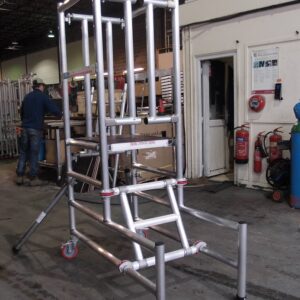
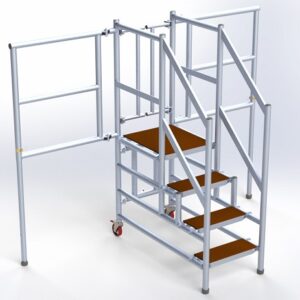
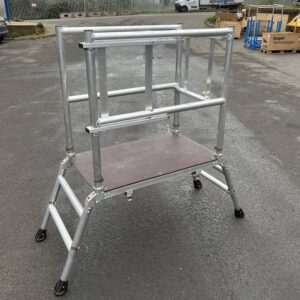
Standard podium platforms: The most common type is the portable, single-person work platform.
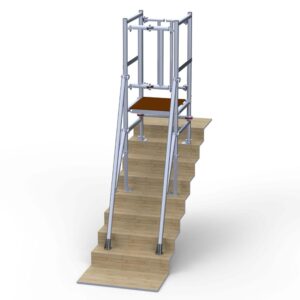
Stairwell podium platforms: Specifically designed for safe use on staircases, featuring adjustable legs to maintain a level platform. Ideal for painting, lighting installation, and maintenance in multi-level buildings.
Mini/compact podium platforms: Smaller, lower-level platforms (like hop-ups with guardrails) are incredibly lightweight and portable. Great for quick, short-duration tasks and reaching slightly elevated areas in confined spaces.
What are podium platforms typically used for?
Podium platforms are designed for tasks needing a stable, elevated surface at lower heights than traditional scaffolding or ladders can offer; this makes them ideal for a range of jobs, including:
- Painting and decorating.
- Plastering and drywall installation.
- Electrical work, like fitting lights.
- Installing ceilings or other overhead fixtures.
- General maintenance and repair.
- Working in confined spaces or narrow corridors where larger equipment won’t fit.
When should podium steps be inspected?
To ensure your safety and prevent injuries when using a podium, always adhere to the following guidelines:
Inspect before use: Before each use, thoroughly inspect the podium to ensure it is in good working condition. If any damage is found, complete an inspection report and do not use it.
Risk assessment: Always conduct a risk assessment for every job to confirm that the podium is the most suitable access method.
Pre-use checklist: Always complete the workstation safety checklist, following both the user guide and the podium’s labels. Failing to follow these instructions can result in serious injury.
Stable positioning: Ensure the podium is always placed on firm and level ground. For maximum stability, position the front of the podium directly in front of your work area.
Personal protective equipment (PPE): Always wear appropriate protective equipment, including workwear and footwear with a flat, firm sole and good grip.
Traffic path awareness: Take necessary safety measures when working near doorways, openings, or other traffic paths to prevent accidental collisions. Never obstruct emergency exits, fire escape routes, or other designated pathways of exit.
Secure after use: Always secure the podium to prevent unauthorised use.
What are the guidelines for using a podium step in bad weather?
Do not use the podium outdoors during adverse weather conditions, such as strong winds or heavy rain.
What’s the difference between a podium step and a stepladder?
For enhanced safety and stability when working at low heights, podium steps are a clear improvement over traditional stepladders. The main differences are:
Secure platform: Unlike stepladders with their narrow rungs or small top steps, podiums boast a large, fully enclosed platform with 360° guardrails. This design allows you to work freely with both hands, significantly reducing the chance of a fall.
Superior stability: Podiums are built for firmness, often featuring wider bases, lockable wheels, and even outriggers. Stepladders, on the other hand, are inherently less stable and require constant vigilance, adhering to the ‘three points of contact’ rule.
Safety standards: Podiums are designed to meet the rigorous BS 8620:2016 standard, providing a higher level of certified safety compared to stepladders, which adhere to different standards, such as BS EN 131.
How should I move a podium?
Before moving a podium, always clear the platform of all people and materials and securely close the gate. When moving, push from the base. Watch out for potholes and uneven surfaces, and be especially mindful of overhead obstructions, such as power lines.
Are podium steps safe?
When used correctly and well-maintained, podiums are a very safe option for low-level work at height. Their design, which includes enclosed platforms, guardrails, and stable bases, significantly lowers the risk of falls compared to traditional ladders. However, like all access equipment, safety hinges on proper use, regular inspection, and consistent maintenance.