Fast Delivery - Checkout for Costs

Please Call 1st for Collections

Order Easily Online – 200+ Products

Bulk Discounts – Trade Prices

COLLECTIONS – Call to check availability

Open 8:00 – 17:00 • Mon-Fri (Excluding bank holidays)

Go to Checkout to Get Your Delivery Cost

Scaffold Fittings

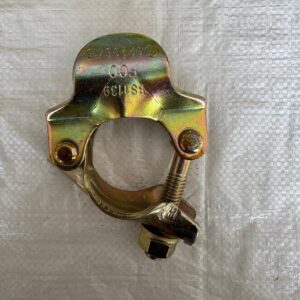
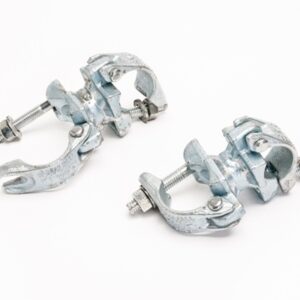
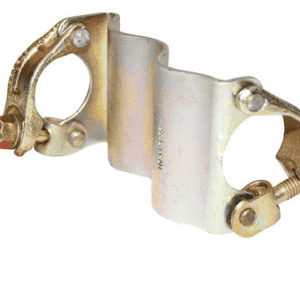
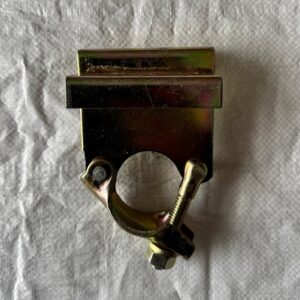
Our versatile range of scaffold fittings includes robust connectors ideal for scaffolds, DIY projects, handrails, and tubular frames, featuring single putlog couplers for fixed 90° connections, load-bearing double couplers for strong right-angle joints, adjustable swivel fittings for flexible angled bracing, tube extension sleeves for external end-to-end attachements, joint pins for internal tube connections, base plates for stable foundations, and girder clamps for attaching to steel beams.

Showing all 18 results

FAQ's

Scaffolding clamps, or couplers/fittings, are vital components that join scaffolding tubes, facilitating the creation of stable and accessible working platforms for elevated construction tasks.

Scaffold fittings (also known as couplers, clamps, or connectors) are essential for joining galvanised steel tubes to build secure, stable scaffolding structures. They ensure safe working platforms at height, support bracing, handrails, toeboards, and more. Understanding each type’s name, alternative names, and specific uses helps you choose the right fittings for compliance, safety, and efficiency.

All our fittings are designed for standard 48.3mm tubes, galvanised for durability, and compliant with UK/EU standards (BS 1139/EN 74). Browse our full range above or shop directly from the product listings.

Quick Comparison Table: Common Scaffold Fittings

Fitting Type

Alternative Names

Load-Bearing?

Main Connections

Primary Uses

Single Coupler

Putlog couplers, singles, wrapovers, clips

No

Transom/putlog to ledger; toeboards to uprights

Secure transoms/putlogs, toeboards, stop-end handrails

Double Coupler

Doubles, 90-degree fittings, right-angle couplers

Yes

Ledger/handrail to upright at 90°

Attach horizontal ledgers/handrails to vertical standards

Swivel Coupler

Swivel clamps, rotating/universal couplers

Yes

Any angle (up to 360°) for bracing

Diagonal/sway bracing, flexible connections

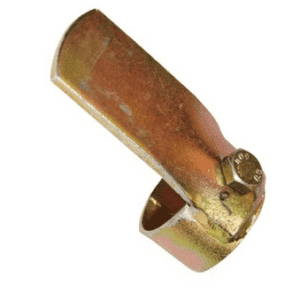
Sleeve Coupler

Sleeves

Varies

End-to-end tubes (vertical/horizontal)

Join tubes end-to-end, adjustable for size variations

Expandable Joint Pin

Expanding joint pin, spigot, joiner

Varies

Internal end-to-end tubes

Secure internal tube joins with an expanding grip

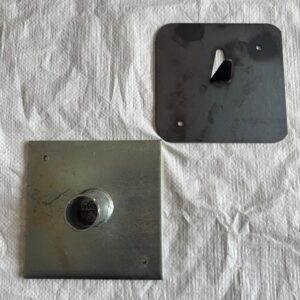
Base Plate

Sole plate, foot plate

N/A (load-spreading)

Upright standards on the ground

Spread load, provide stability on solid surfaces

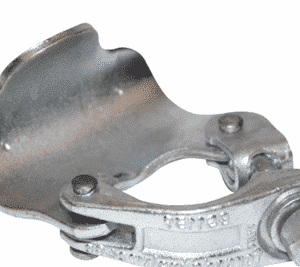
Putlog Head Adaptor

Spade end, putlog head

Varies

Standard tube to wall/brickwork

Converts tubes to putlogs for platform support in independent scaffolds

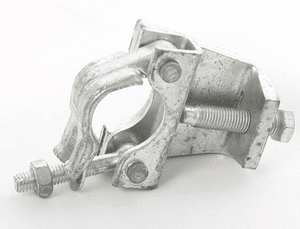
Gravlock Girder Clamp

SK fittings, beam clamps

Varies

Scaffold tube to steel beam

Attach tubes to steel girders/beams (used in pairs for edge protection)

Board Retaining Clip

Board clamp, BRC clamp

N/A

Boards to transom tubes

Secure scaffold boards to prevent movement

Roofing Coupler

Wrigley fittings, waffle clamps

N/A

Tubes to corrugated iron sheets

Temporary roofing structures (two per sheet)

Tredda Plate

Hi-vis base plate cover

N/A

Under base plates

Prevents tripping hazards on site

Tube to Prop Double Coupler

Prop double fitting

Varies

Tube to acrow prop at 90°

Brace/stabilise adjustable props

Tube to Prop Swivel

Prop swivel coupler

Varies

Tube to acrow prop at any angle

Flexible bracing for props

Tube to Hoarding Coupler

Hoarding coupler

N/A

Hoarding panels to scaffold tubes

Secures perimeter hoarding for safety/security

Oyster Coupler

Flush fitting coupler

No

Putlog/transom to the ledger

Flush platform finish for board support

Why These Fittings Matter

Each fitting serves a specific purpose: maintaining structural integrity, preventing slips, and meeting safety regulations (e.g., NASC guidelines). Load-bearing types (double/swivel) handle significant forces, while non-load-bearing ones (single/oyster) focus on positioning and security. Always inspect fittings for damage/corrosion, and use a scaffold spanner to ensure proper tightening.

Here’s a simplified overview of common scaffold fitting types:

Double couplers: These clamps are used for strong, 90-degree connections, typically for securing ledgers to uprights and handrail tubes.

Single couplers: These typically connect the transom tube supports to the horizontal ledgers on which the boards are placed; this fitting is non-load-bearing.

Swivel couplers: These connect tubes at any angle, often for diagonal or sway bracing.

Sleeve couplers: Allow tubes to be joined end-to-end externally ( typically ledgers, handrails and vertical standards) for longer runs or extended height.

Expandable joint pins: This is an internal connector that is also used to join tube ends to each other.

Girder clamps: This fitting attaches scaffolding tubes to steel beams.

Base plates: These provide a stable base for the scaffold’s legs.

Board retaining clamps: These are used to secure the platform boards to the tube, ensuring the boards do not move.

Putlog head adaptors:  This fitting allows tubes to be inserted into walls for the creation of putlog scaffolds.

The most common nut size you’ll find on a standard scaffold fitting is 21mm, which fits a 7/16-inch scaffold spanner. This size is the industry standard for most scaffolding couplers and clamps. 

Scaffold clamps and fittings are the most common components used for the erection of tubular structures, safe working platforms and handrail systems within the construction and DIY industry. They connect tubes in straight lines or at different angles to create safe scaffolding structures for users to work from while ensuring structural integrity. The various types of scaffolds that fitting and clamps are used to create include temporary roofs, access scaffolds, birdcages, cantilever scaffolds, gantry scaffolds, independent structures, shoring frameworks, putlog scaffolds, and edge protection systems.

Scaffold clamps require regular inspections:

  • Pre-use: Quick visual checks should be carried out to inspect for immediate issues.
  • Weekly: Detailed inspections for damage, corrosion, and secure connections should be undertaken.
  • Incident-based: Immediate checks after impacts or extreme weather. Look for damage, looseness, proper size, and correct installation.

The benefits of scaffold fittings include:

  • Versatile connection capabilities.
  • Strong and durable steel construction.
  • Corrosion-resistant galvanisation.
  • Compliance with EN 74 and BS 1139 standards.
  • User-friendly design for quick assembly.
  • Contribution to overall scaffolding safety.

Though generally designed to hold roughly 6.25 kN (1,400 lbs), the load capacity of scaffold clamps is not uniform. Design and manufacturer specifications are essential for determining the accurate weight limit, and a specialist should always be consulted.

To ensure a safe scaffolding structure, please follow these steps for tightening the fittings:

With a scaffold spanner:

  • Position the fitting on the tube.
  • Use the box end of the spanner to tighten the nut firmly, avoiding excessive force.

With a scaffold impact wrench:

  • Position the clamp on the tubes.
  • Use the impact wrench to tighten the nut quickly and efficiently, being mindful not to overtighten.
  • Correct positioning of the fitting on the tube is required before tightening.

Standard scaffold clamps and couplers are designed to fit scaffolding tubes that have a 48.3mm diameter.

Latest customer purchases