




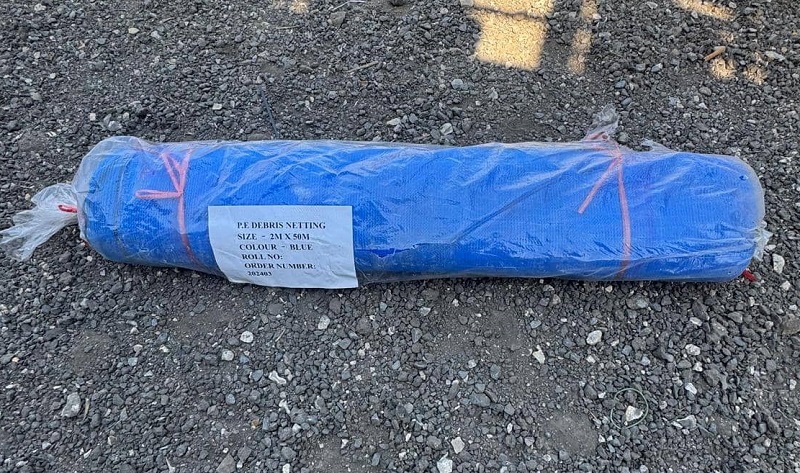


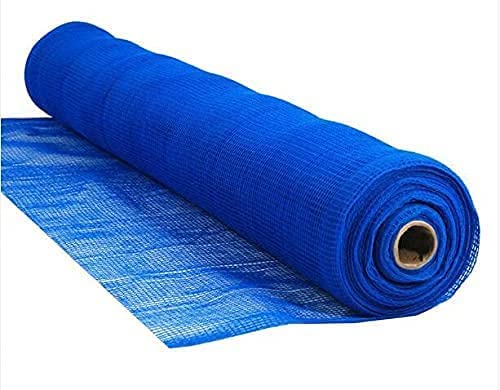
Our brand-new blue debris netting is available in rolls 50m long and 2 or 3 metres wide. They are heavy-duty, tear-resistant, fine-knitted mesh made from high-density polyethylene. This fabric protects against falling debris and dust when working at height. Each roll weighs approximately 4kg (2m), 6kg (3m) and features button holes at 15cm intervals, making it easy to install using plastic zip ties. Also, perfect for creating a privacy wall or protecting your plants from bugs and other pests. It offers minimal impact on wind load speeds and has a UV rating of 3%.
Dimensions and specifications
| Specifications | Dimensions |
| Condition | NEW |
| Length | 50m |
| Width | 2m or 3M |
| Weight | 2m (4kg) or 3m (6kg) Approx. |
| Colour | Blue |
| Made From | HDPE - UV stabilised (3%) |
Frequently asked questions
What is debris netting used for?
They are used on a scaffolding structure to help protect pedestrians and traffic from falling debris. It also keeps dust and other site mess contained within the netting while allowing air circulation. This fine-mesh netting helps reduce rain and wind from entering the site, allowing workers to continue their work. This type of netting can also be used to create privacy; it can be attached to temporary fencing panels to create a secure perimeter on a railway construction site or even at music festivals. This mesh fabric is often used in gardens and allotments, as it helps protect plants and vegetables and can also serve as a windbreaker.
What materials are used for scaffold netting?
This high-quality, strong netting is made from knitted high-density polyethylene monofilament, which is also UV-stabilised, making it more flexible.
What is the covering on scaffolding called?
It is usually called scaffold or debris netting; however, it can also be known as safety and fall protection netting. Another material that typically surrounds a scaffold is Monarflex sheeting, a white plastic sheet that keeps the structure watertight.
What are the different types of scaffold netting?
You have the standard debris net (this one), or we also sell fire-retardant debris netting that prevents the spread of flames should a fire break out.
How do you secure debris netting to a scaffold?
This type of protection is fixed to the inside of a scaffold’s framework and secured with plastic cable ties, also called zip ties. The ties are inserted through the eyelet holes and around the scaffold tube to create a secure connection. The eyelets are at the top and bottom of the fabric, and each hole is approximately 15cm apart.
What is the height of a roll of debris netting?
This particular product has a height of either 2 or 3 metres.
What is the length of a roll of debris netting?
The standard length of a roll of scaffold netting is 50 metres.
What are the benefits of using scaffold debris netting?
When using this product on a scaffold, it offers many benefits, including:
- Prevention of materials, equipment or rubbish falling from height.
- It can aid as fall protection for workers.
- Contains dust, fumes or other airborne irritants within the site.
Does debris netting go on the inside or outside of scaffolds?
This item is fixed to the inside of a scaffolding structure to ensure everything within that area is enclosed, and there is no risk of anything falling from the platform.
Is scaffold netting good for allotments?
Yes, you can use this product in your garden or allotment to help protect plants and veggies from insects, birds and other animals. Simply cover the areas with the netting to safeguard crops, vegetation and produce.
How does debris netting keep you safe?
Debris nets are used to protect foot and vehicle traffic that may be passing by a building site, as this barrier helps to prevent falling objects, dust and debris.
Does debris netting offer privacy?
This product does add some privacy and is often used on temporary Heras fence panels on construction sites. It has also been used as a partition during sports events and as a barrier or privacy fencing in gardens.
Q & A




Reviews
There are no reviews yet