
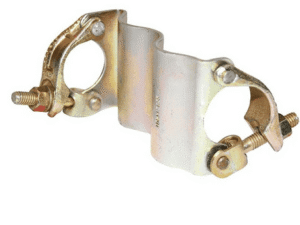
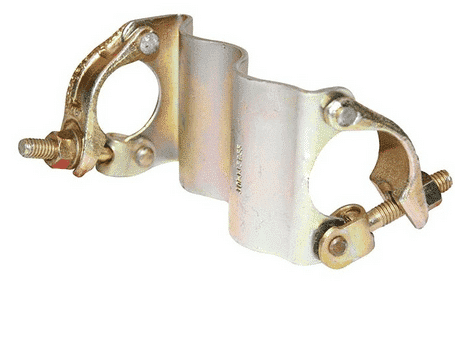


Roofing Coupler: Reliable Fastening for Temporary Scaffolding Roofs
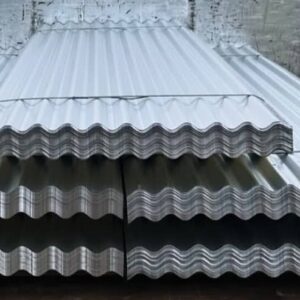
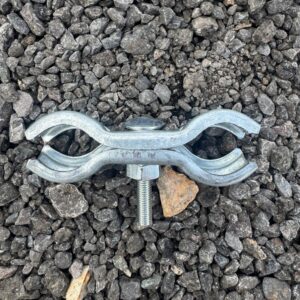
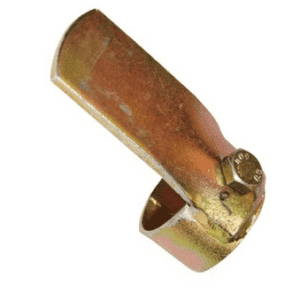
The Roofing coupler is designed to securely fasten corrugated metal roof sheets to 48.3mm-diameter steel scaffolding tubes, providing a watertight covering for temporary roofing scaffolds. Often referred to as “tin hats,” wrigleys, waffles, roof couplers, waffle clamps, or CI sheet couplers, this versatile component plays a crucial role in both temporary and more permanent scaffolding-based roofing structures.
This coupler is engineered to clamp CI sheets of standard thickness (0.70mm) with a 76.2mm pitch, and it can accommodate a maximum combined sheet thickness of up to 3.0mm. With its design eliminating the need for drilling, the roofing coupler enables quick, hassle-free setups—ideal for construction sites, renovations, or event staging.
Whether you’re a professional scaffolder or a DIY enthusiast, the Roofing Coupler ensures that your roofing sheets remain securely in place, providing weatherproof protection and maintaining structural integrity without compromising on safety or speed.
Key Features and Benefits of the Roofing Coupler
Crafted from durable pressed steel, the roofing coupler offers precision engineering and easy installation.
Key features include:
Corrugated Matching Profile: Fits standard metal roofing sheets securely.
Drill-Free Installation: No drilling required—just position, clamp, and secure.
Non-Load-Bearing: Designed for fastening without contributing to structural load.
Standards Compliant: Certified to BS 1139, EN 74, and BS 2482:2009 for reliability.
Benefits:
Time & Cost-Efficient: Quick setup reduces labour costs and streamlines workflow.
Sustainable: Made from responsibly sourced materials for long-lasting quality.
Weather-Resistant: Ideal for temporary or semi-permanent roofing, boosting site safety.
Product Specifications
For a clear overview of the roofing coupler’s technical details, refer to the table below:
| Specification | Detail |
|---|---|
| Condition | New |
| Compatible Tube Size | 48.3mm |
| Connects To | Corrugated Iron (CI) Sheets |
| Material Type | Pressed Steel |
| Approximate Weight | 1.00kg |
| Load-Bearing | No |
| Compliance Standards | BS 1139, EN 74 |
Frequently Asked Questions (FAQs)
How do I install a roof coupler?
Installing the roofing coupler is straightforward and efficient. Follow this step-by-step table for the best results:
Step | Action Description |
1 | Insert the coupler through the lower horizontal scaffold tube and secure it in position. |
2 | Align the CI sheet over the coupler’s corrugated section for a precise fit. |
3 | Attach a second coupler on the top side to sandwich the sheet securely. |
4 | Continue adding sheets as needed, then insert and tighten an upper tube through the top coupler sections to lock everything in place. |
What are the compatible sheet specifications for the roofing coupler?
To ensure optimal performance, the roofing coupler is designed for specific sheet profiles. Here’s a breakdown:
Sheet Attribute | Specification |
Standard Thickness | 0.70mm |
Pitch | 76.2mm |
Maximum Combined Thickness | Up to 3.0mm |
Recommended Usage | 2 Couplers per Sheet |
What is a roofing coupler, and how does it function in scaffolding?
A roof coupler is a pressed steel clamp used to fasten corrugated iron sheets to scaffold poles, creating temporary or semi-permanent roofs. It works by gripping the sheets via its corrugated centre without requiring any holes or modifications.
Is drilling necessary when using this coupler?
No, one of the key advantages is its drill-free design, which simplifies installation and significantly reduces setup time.
What safety standards do these roof couplers meet?
They comply with BS 1139 and EN 74 for general scaffolding fittings, as well as BS 2482:2009 for timber scaffold boards, ensuring they meet industry benchmarks for quality and safety.
How many roofing couplers do I typically need for each sheet?
We recommend using at least two couplers per corrugated metal roof sheet to achieve a stable, even securement.
Can this coupler handle load-bearing applications?
No, it’s specifically non-load-bearing and intended solely for fastening, focusing on sheet attachment rather than structural support.
Can roofing couplers be used with other types of corrugated sheets?
No, they are specifically designed for standard corrugated iron (CI) or galvanised metal sheets with a 76.2mm pitch and a standard thickness of up to 0.70mm (max combined thickness 3.0mm). The coupler’s corrugated profile precisely matches that of traditional wavy CI sheets. For box profiles, plastic, or other non-matching sheets, alternative fixings such as screws, specialist clamps, or different couplers may be required to ensure a secure hold.
How do I prevent sheets from lifting or flapping in high winds?
Use at least two couplers per sheet (one at each end) as standard, and consider adding a third in the middle for longer sheets or exposed sites. Ensure the upper scaffold tube is securely fastened through the top sections of the couplers, sandwiching the sheets firmly. Overlap sheets adequately (typically one corrugation), and position couplers on the high points of the corrugations for best grip. In very windy conditions, supplementary strapping or weighting may help, but always follow site-specific risk assessments.
Are roofing couplers reusable, and how long do they typically last?
Yes, they are fully reusable when undamaged. Made from durable pressed galvanised steel with a zinc coating for rust resistance, they can last for years with proper care: store them dry, avoid excessive bending or overloading, and inspect them for cracks, deformation, or corrosion before each use. Many scaffolders report reusing the same sets across multiple temporary roof projects over 5–10+ years.
What torque or tightness is needed when securing the couplers?
Tighten using a standard scaffold spanner or impact wrench until firm (typically to a slip resistance level aligned with EN 74 standards). Avoid over-tightening, as it could deform the pressed steel or damage the threads. The goal is to secure the clamping without gaps; test by gently tugging the sheet to confirm there is no movement.
Q & A
 Roofing Coupler
Reviews
There are no reviews yet