
Please Call 1st for Collections
Order Easily Online – 200+ Products
COLLECTIONS – Call to check availability
Open 8:00 – 17:00 • Mon-Fri (Excluding bank holidays)
Go to Checkout to Get Your Delivery Cost
220 Used Scaffold Boards Turned into a Timber Sculpture in Cambridge
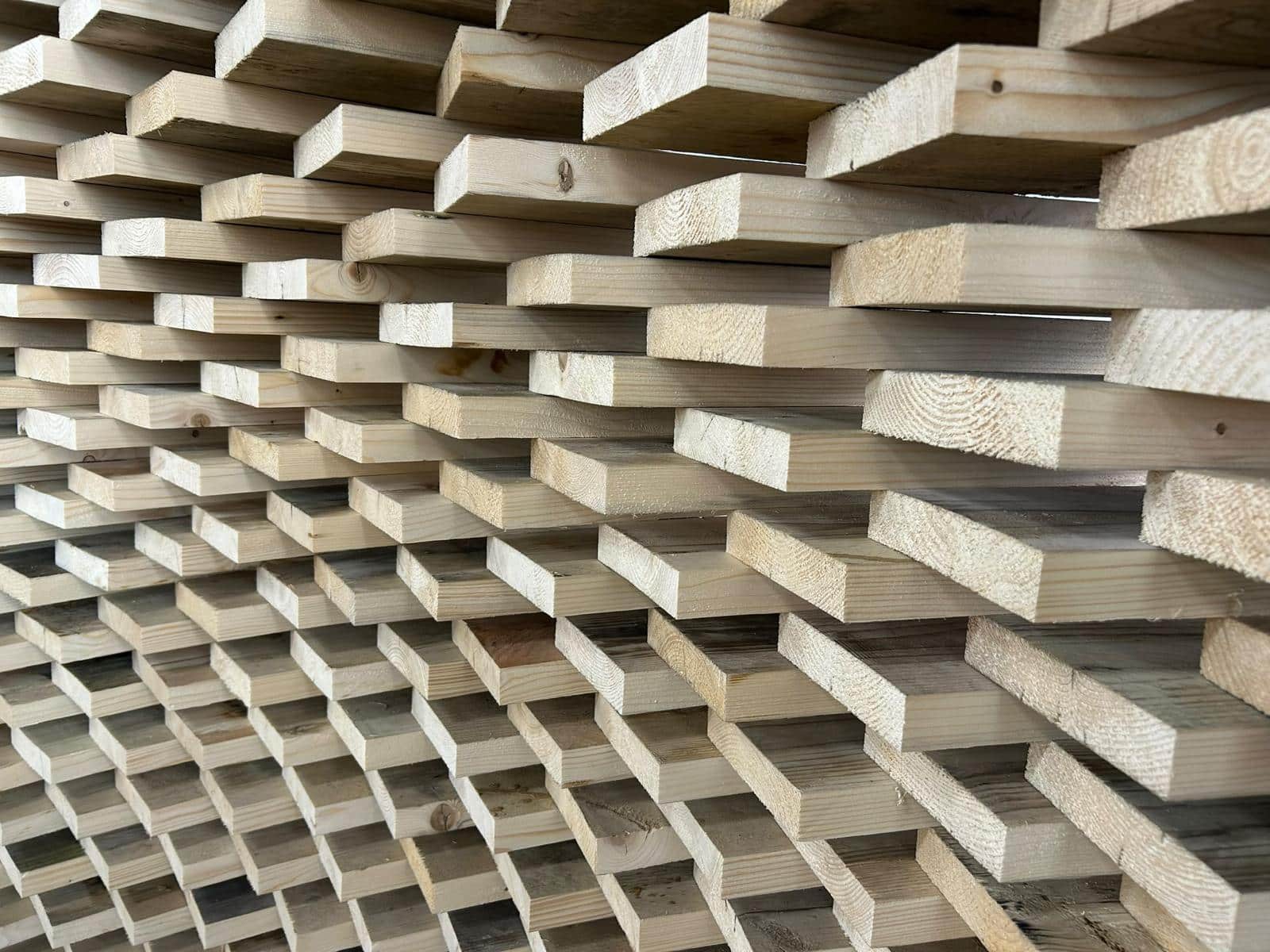
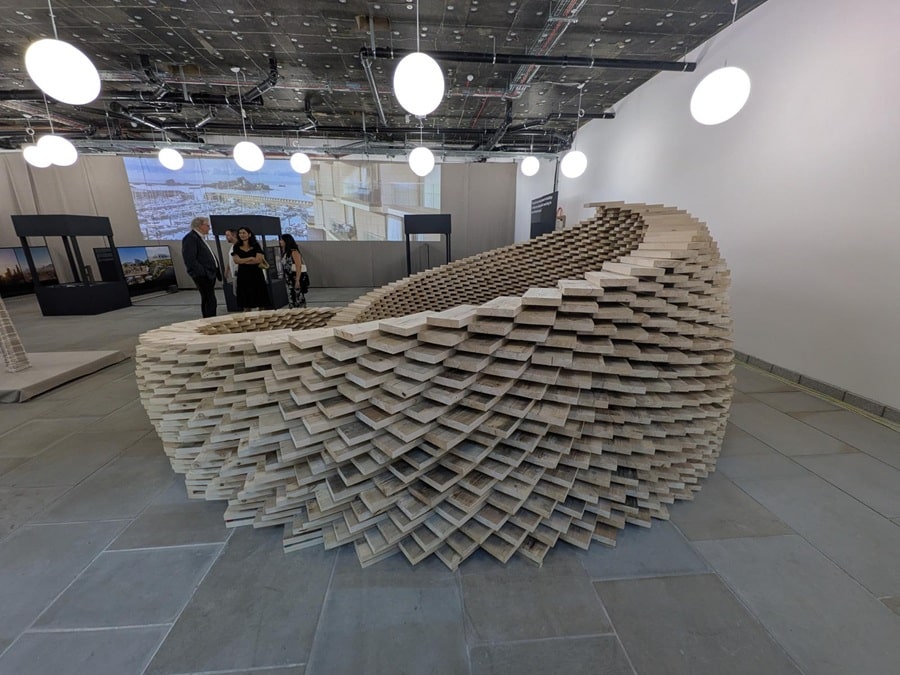

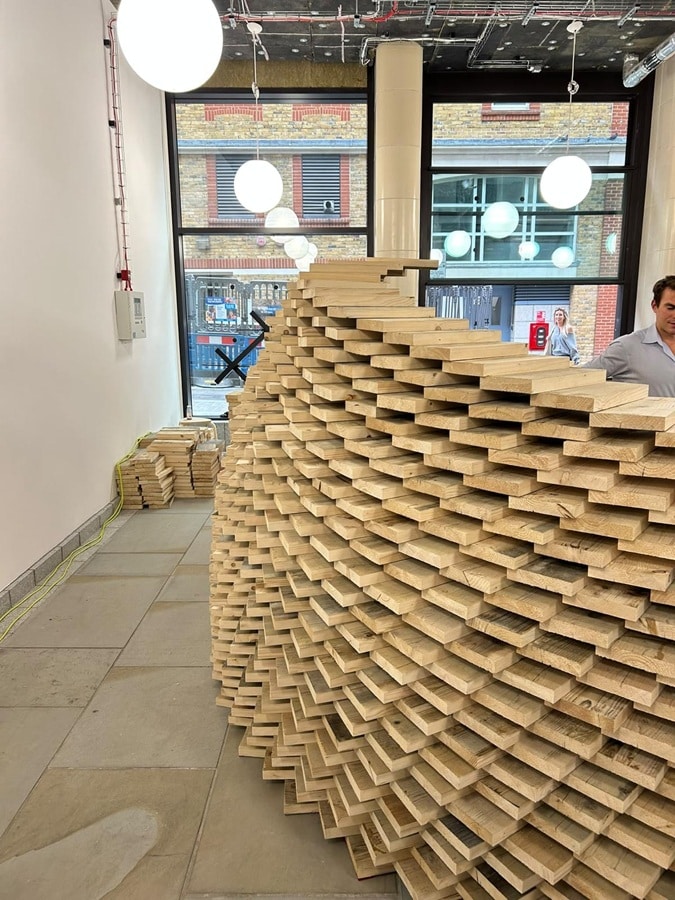
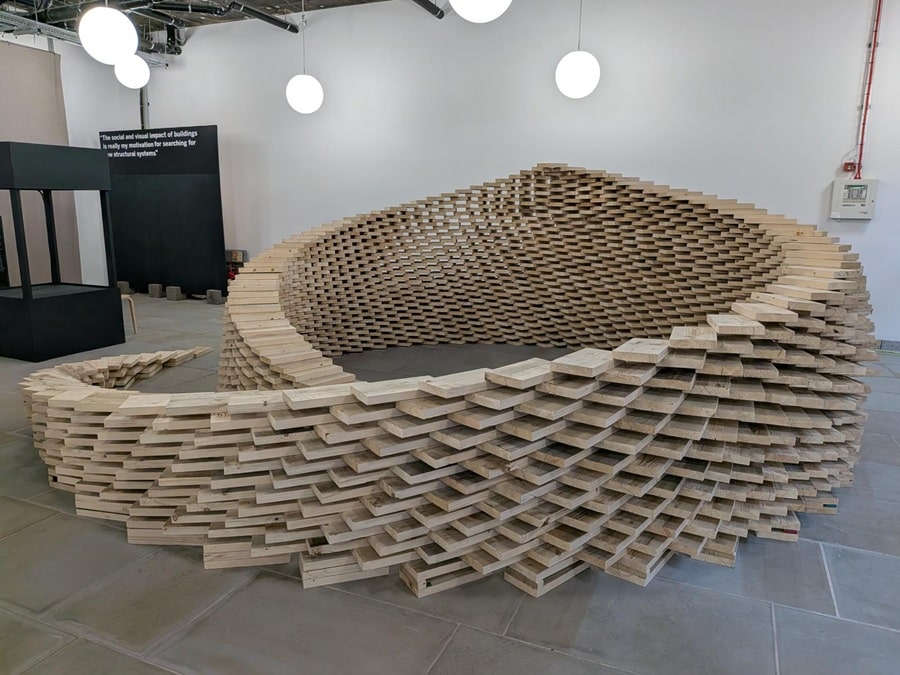
A customer recently sent us this unusual project involving reclaimed timber, after buying 220 used 13ft scaffold boards to create a large wooden sculpture for a Cambridge exhibition.
Before building the piece, they cut the full-length boards down and sanded them. They then layered the resulting timber to create a substantial curved structure, with hundreds of exposed ends forming a large part of its finished appearance.
220 Used 13ft Scaffold Boards
With 220 13ft boards, the project started with a considerable quantity of reclaimed timber.
The boards were not used in their original form or simply laid side by side to create a flat surface. Instead, the customer used the available timber to create the many individual components needed for the sculpture.
Although the boards were reworked for the project, their previous use has not been completely disguised. Differences in colour, grain and condition remain visible across the finished timber, giving the sculpture variation rather than a completely uniform appearance.
Building the Curved Structure
One of the sculpture’s most interesting aspects is how its overall shape was created.
The timber is arranged horizontally in successive layers, but those layers do not follow a single straight line. Their position gradually changes around the structure, allowing broad curves to develop as the sculpture rises.
In some areas, the timber projects further out before the next layer changes direction. This creates the stepped edges visible around the upper and outer parts of the piece.
The height changes as well. Lower sections sweep around the exhibition space before rising into much taller areas, including a prominent high point at one end. From there, the profile gradually falls back towards the lower sections.
Rather than appearing as separate straight walls joined together, the layers’ movement gives the sculpture a continuous, flowing shape.
An Open Layered Design
The sculpture is not a solid timber structure.
Spaces have been maintained between many of the horizontal layers, allowing light and views through parts of the piece. This gives the sides a much more open appearance despite the large quantity of timber involved.
Those gaps also make the construction’s depth particularly noticeable. Looking through the sides, you can see multiple rows continuing behind one another rather than forming a single outer face.
The effect changes around the piece as its depth, height and direction alter. Some areas appear relatively open, while the deeper sections contain considerably more overlapping timber.
The exposed ends are another prominent design feature. Instead of being hidden behind a finished facing, they create a repeated pattern around the curves and stepped upper edges.
A Sculpture That Changes From Different Angles
The piece’s scale and shape mean it looks noticeably different depending on where you stand.
From the wider exhibition area, its overall curved form and changing height are most apparent. Moving closer reveals the layers’ depth and the many separate pieces that create the shape.
The inside is different again. The curved walls surround a substantial open area, and from here you can follow the changes in height and direction around the structure.
Some areas also extend beyond the main line of the layer beneath them, making the construction method much easier to understand up close.
This means the same basic material produces several different visual effects without another finish covering or concealing it.
Used Timber Left as Part of the Finished Piece
The scaffold boards’ rectangular profile shows throughout, particularly around the exposed ends and stepped sections. The sanding has produced a more finished surface for the exhibition piece, but the timber has not been made to look completely new or identical.
That suits a structure where so much of the material remains exposed. Rather than creating a smooth outer skin, the design lets the individual lengths, layers, and spaces between them remain visible.
Even at its highest point, the same construction continues, tying the lower sweeping sections and taller areas together.
From Scaffold Boards to Exhibition Sculpture
We supply used scaffold boards for all sorts of projects, but receiving this customer submission was something quite different.
What makes the finished piece particularly interesting is that it doesn’t try to make the original material unrecognisable. The proportions and exposed ends of the timber are still visible, but the layering completely changes its overall form.
It is a great example of a customer taking a large quantity of used scaffold boards and turning them into something far removed from their original purpose.
Another Project Using Reclaimed Scaffold Boards
Another example of customers reusing old timber is a scaffold board shed shelving project in Brighton & Hove, where the planks were repurposed to create practical storage space.