


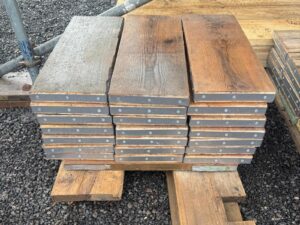


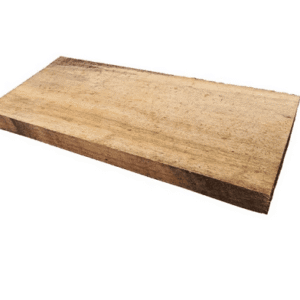
Our reclaimed scaffold boards are made from durable European whitewood and feature an authentic rustic appearance with natural weathering, grain markings and signs of genuine previous use. Originally used as safe working platforms, these reclaimed timber boards remain in excellent condition for repurposing into shelving, furniture, decking, raised beds and interior projects.
Available in lengths from 2ft to 13ft, all boards measure approximately 225mm wide and 36–38mm thick.
Sustainably sourced and full of character, reclaimed scaffold boards are a popular choice for rustic furniture, garden projects and industrial-style interiors.
Available in sizes from 2ft–13ft with fast nationwide delivery across England.
Why Choose Our Reclaimed Scaffold Boards
Our reclaimed scaffold boards are carefully selected for their authentic rustic character, making them ideal for furniture projects, shelving, garden features and industrial-style interiors.
- Sustainably sourced reclaimed timber
- Hand sorted for quality and appearance
- Authentic weathered finish with unique character
- Strong and durable structural timber
- Ideal for tables, shelving, raised beds and furniture
- Available in multiple lengths and thicknesses
- Nationwide UK delivery available
- Bulk orders welcome
Every board has its own individual grain, markings and aged appearance, giving your project a genuine reclaimed timber finish that cannot be replicated with new wood.
Popular Uses for Reclaimed Scaffold Boards
Our reclaimed scaffold boards are widely used for both indoor and outdoor projects thanks to their strength, character and rustic appearance.
Rustic Shelving – Perfect for floating shelves, alcove shelving and industrial-style wall units.
Dining & Coffee Tables – Create handmade rustic tables with authentic reclaimed timber character.
Kitchen Worktops – A popular choice for bespoke kitchen counters and breakfast bars.
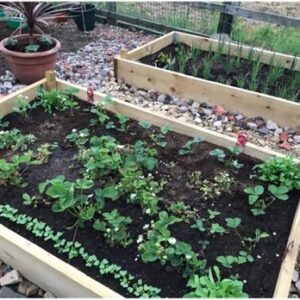
Raised Garden Beds – Strong and durable timber ideal for vegetable planters and garden projects.
Decking & Outdoor Seating – Suitable for decking areas, benches and outdoor entertaining spaces.
Wall Cladding – Add warmth and texture to interiors with reclaimed timber wall panels.
Garden Furniture – Ideal for building rustic benches, tables and outdoor furniture sets.
Retail & Commercial Displays – Frequently used in cafés, bars, shops and industrial-style interiors.
Reclaimed Scaffold Board Ideas & Inspiration
Browse some of the most popular ways our reclaimed scaffold boards are used in furniture, shelving, garden projects and rustic interiors.
Reclaimed Board Dimensions
Reclaimed boards are often cut from older boards, so that exact weights can vary slightly due to moisture content, wear, and age — these are approximate averages for dry/seasoned conditions (density ~470 kg/m³ for European whitewood).
Length (ft) | Length (m approx.) | Width (mm) | Thickness (mm) | Approximate Weight (kg) | Common Uses (Reclaimed) |
2ft | 0.6m | 225 | 38 | ~2.5 – 3.5 | Small shelves, borders, edging |
3ft | 0.9m | 225 | 38 | ~3.5 – 5.0 | Short shelves, garden accents |
4ft | 1.2m | 225 | 38 | ~5.0 – 6.5 | Compact benches, steps |
5ft | 1.5m | 225 | 38 | ~7.0 – 8.0 | Shelving, small raised beds |
6ft | 1.8m | 225 | 38 | ~8.5 – 9.5 | Medium shelves, planters |
7ft | 2.1m | 225 | 38 | ~10.0 – 11.0 | Tables, longer borders |
8ft | 2.4m | 225 | 38 | ~11.5 – 12.5 | Popular for decking, benches, and shelving |
9ft | 2.7m | 225 | 38 | ~13.0 – 14.0 | Extended tables, cladding |
10ft | 3.0m | 225 | 38 | ~14.5 – 15.5 | Decking sections, large furniture |
11ft | 3.3m | 225 | 38 | ~16.0 – 17.0 | Custom projects, longer spans |
12ft | 3.6m | 225 | 38 | ~17.5 – 18.5 | Large raised beds, rustic features |
13ft | 3.9m | 225 | 38 | ~18.5 – 20.0 | Full-length decking, big furniture builds |
Pairing Your Scaffold Boards With Fittings, Tubes & Trestles
While our reclaimed scaffold boards offer a beautiful rustic look and eco-friendly appeal, many timber DIYers prefer our new whitewood scaffold boards for a modern finish and higher load rating. Whichever you choose, you can pair them with our sturdy tube clamps or scaffold fittings, plus used scaffolding tubes, to build strong custom structures or opt for our convenient trestle and board kits for instant low-level platforms.
Reclaimed Scaffold Board Frequently Asked Questions
What are Reclaimed Scaffold Boards?
These are old wooden planks repurposed from scaffolding structures. They naturally display wear and tear, including slight notches, paint, splits, and cement, which contribute to their sought-after rustic charm. By giving these boards a second life, you’re choosing a sustainable and character-rich material.
Reclaimed Scaffold Board Uses
These sturdy, weathered boards (typically 225mm wide × 36–38mm thick) are perfect for sustainable, rustic DIY projects.
Category | Specific Uses / Project Ideas | Recommended Lengths | Difficulty Level |
Garden Furniture | Benches, picnic tables, outdoor sofas, garden seating, loungers, bar tables, planting benches | 8ft–13ft | Medium |
Shelving & Storage | Floating shelves, bookcases, deep wall shelves, potting benches, kitchen racks, display units, and garage shelving | 4ft–10ft | Easy |
Garden Structures | Raised beds (vegetable/herb/flower), multi-tier raised beds, vegetable patches, planters, borders, edging, steps, compost bins, retaining walls | 8ft–13ft | Easy–Medium |
Indoor Furniture | Dining tables, coffee tables, desks, console tables, sideboards, bed headboards, TV stands, workbenches | 8ft–13ft | Medium |
Outdoor Surfaces | Decking (small patios, garden paths, pool surrounds), walkways, steps, platform bases, garden bridges, shed bases | 10ft–13ft | Medium–Hard |
Wall & Feature Elements | Wall cladding/panelling, feature walls, headboards, room dividers, internal flooring | 8ft–13ft | Medium |
Other Creative Projects | Pergolas/arbours (supports), dog beds, tool racks, window boxes, children’s play furniture, fencing/gates, kitchen worktops, lean-to cladding, sheds | Varies (6ft–13ft) | Varies |
Quick tips
- Sand lightly and seal with outdoor varnish for longevity in garden use (especially for raised beds and decking).
- Leave raw for maximum authentic rustic character indoors.
- Always inspect for stability before load-bearing projects, such as raised beds or decking.
How Would you Define Reclaimed Scaffold Boards?
Reclaimed scaffold boards are old wooden planks repurposed after their initial use on scaffolding structures. This history is evident in their natural wear and tear, which can include subtle notches, traces of paint, minor splits, and even remnants of cement. Far from imperfections, these unique characteristics create a desirable rustic charm. By giving these boards a new purpose, you’re not only selecting a material rich in character but also making a sustainable green choice.
Are old Scaffold Boards Reused or Recycled?
They are both reused and recycled. After serving their time on busy construction sites, scaffold boards often embark on a new journey, finding popularity with DIY enthusiasts and designers alike. Their inherent strength and ready availability make them an ideal material for a wide range of projects, from crafting robust furniture and durable decking to creating charming, raised garden beds and characterful flooring. This growing demand for used timber highlights a broader movement towards embracing sustainable and uniquely textured materials.
How Do You Restore Used Scaffold Boards?
Give reclaimed scaffold boards a new life! This guide shows you how to restore them into beautiful home features, a simple guide:
Inspect the board for:
Rot: Soft, spongy areas or a musty smell. (Extensive rot often means the item is unsalvageable.)
Damage: Large cracks, splits, or significant warping. (Minor damage is repairable; severe damage compromises integrity.)
Infestation: Small holes or sawdust. (Treat with insecticide if present.)
Clean the board: Scrape off any old dirt, paint, or concrete. Then, use a stiff brush and water to scrub the board clean. Let it dry completely before you move on.
Smooth the board: Use a sander to remove splinters and rough spots. Start with rough sandpaper to quickly smooth the wood, then use a finer paper to achieve a smooth finish.
Protect the wood: To keep the board from water or sun damage, you need to protect it. For outside projects, use a special outdoor wood sealant or paint. For interior projects, you can use varnish or wood oil to enhance appearance and durability.
Can Reclaimed Scaffolding Boards Be Used for Decking?
Yes, reclaimed scaffold boards make durable, unique, and sustainable decking. Their rustic charm and budget-friendly nature are significant advantages. Here are some considerations:
Variability: Expect differences in colour, texture, and imperfections. You’ll need to sort and select boards for a consistent look.
Preparation: Thoroughly clean, sand, and remove all hardware. Be prepared to cut or join boards and check thickness carefully.
Safety & Maintenance: Inspect the boards for damage or rot; discard compromised ones. Like any deck, regular cleaning, oiling, or staining is crucial for longevity and appearance.
Success hinges on careful planning, preparation, and board selection.
What Makes Reclaimed Boards a Popular Choice?
Reclaimed boards are a sustainable and cost-effective choice for DIY projects. Their versatility, unique history, and nostalgic charm offer a compelling alternative to new timber.
Can You Build a Shed Out of Reclaimed Timber?
Yes, you can! Building a shed from reclaimed boards is a great way to create a sturdy, rustic-looking structure while being eco-friendly.
What are the Advantages of Reclaimed Timber?
Reclaimed boards offer a compelling mix of environmental, aesthetic, and practical advantages:
Eco-Friendly: They reduce deforestation and minimise resource use, making them a sustainable choice.
Unique Look: Their weathered texture and imperfections add irreplaceable character and rustic charm to any project, from flooring to furniture.
Exceptional Durability: These boards are incredibly robust and long-lasting, often outperforming new timber due to their proven ability to withstand harsh conditions.
Budget-Friendly: Though initial costs might be similar to new wood, their longevity and unique look offer long-term savings and can even boost property value.
How is Reclaimed Timber Environmentally Sustainable?
Opting for used scaffolding boards for your DIY projects is a simple way to embrace sustainability and add character. These unsanded whitewood boards offer a unique, eco-friendly solution by:
Reducing Deforestation: You’re directly helping preserve forests and reduce logging.
Saving Energy: They eliminate the energy-intensive processes of producing new lumber, significantly lowering the carbon footprint.
Minimising Waste & Chemicals: You reduce waste and avoid the use of harmful chemicals often used in new timber production.
Promoting a Circular Economy: Choosing them helps conserve resources and reduce environmental impact.
What Other Uses Do Reclaimed Boards Have?
Reclaimed boards are versatile for countless projects, blending practicality with aesthetic appeal.
They’re perfect for outdoor spaces like decking, fencing, durable furniture, stylish cladding, and custom planters.
Indoors, you can use them for furniture such as shelving, bookshelves, worktops, and coffee tables, or for interior design elements such as flooring, feature walls, picture frames, and mirror boards.
Reclaimed timber is a valuable resource for DIYers and professionals alike.
Can Reclaimed Wood Rot?
Reclaimed timber, with proper care, resists rot. Treatment varies by use: waterproof staining for outdoors, and oiling, waxing, or varnishing for indoor applications will help extend its lifespan.
What Does Upcycling a Scaffold Board Mean?
Upcycling transforms used scaffold boards into valuable new items. This process reduces waste, promotes sustainability through reuse, and sparks creativity. It’s a great way to give old boards a new purpose and decorate affordably.
Are Reclaimed Boards Suitable for Raised Beds?
Yes, reclaimed boards are a popular, robust choice for raised garden beds, as they often offer a more budget-friendly option than new timber.
How Do I Cut Reclaimed Wood?
Cutting reclaimed wood to size is simple with a handsaw or electric circular saw; this opens up a world of DIY possibilities, letting you create bespoke shelves, distinctive wall cladding, or a solid tabletop.
How Would You Describe the Appearance of Reclaimed Timber Boards?
The rustic beauty of reclaimed scaffold boards lies in their natural imperfections, including nail holes, chips, wood splits, and saw marks. You can enhance their appearance by selecting boards with the desired character and trimming the ends, which also removes the banding. While we prioritise flat, non-warped boards, some minor imperfections are to be expected with reclaimed timber.
Which Factors Contribute to the Popularity of Reclaimed Scaffold Boards?
The appeal of reclaimed boards lies in their sustainability and environmental friendliness, making them an ideal choice for DIY projects. Their versatility and cost-effectiveness, combined with the unique history and nostalgic charm they bring, offer a compelling alternative to new timber.
How Can I Stop the Reclaimed Timber I Use From Splitting?
Preventing splitting and damage hinges on proper treatment, which includes thoroughly drying and acclimating the boards before applying a suitable sealant to protect against moisture.
1 review for Reclaimed Scaffold Boards – European Whitewood 225mm x 38mm All Lengths
Q & A




D luff –
Very impressed with the reclaimed scaffold boards, solid, durable, and in great condition, perfect for my project, fast delivery and helpful driver
Highly recommended
scaffolder (store manager) –
Thank you for your kind words! We’re thrilled the scaffold boards met your expectations and that delivery went smoothly. We really appreciate your recommendation!