





Galvanised Scaffold Base Plates – Your Reliable Ground-Level Foundation for Every Scaffold Project
Galvanised scaffold base plates provide the sturdy, corrosion-resistant foundation that professional scaffolders and competent DIY users rely on to build safe, level structures from the very first tube. These essential heavy-duty steel plates sit directly under each vertical standard, evenly distributing weight to prevent sinking, shifting, or instability — whether your site is solid concrete or softer soil.
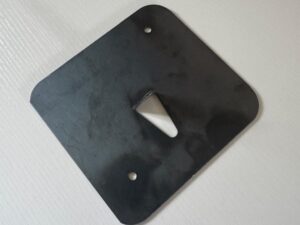
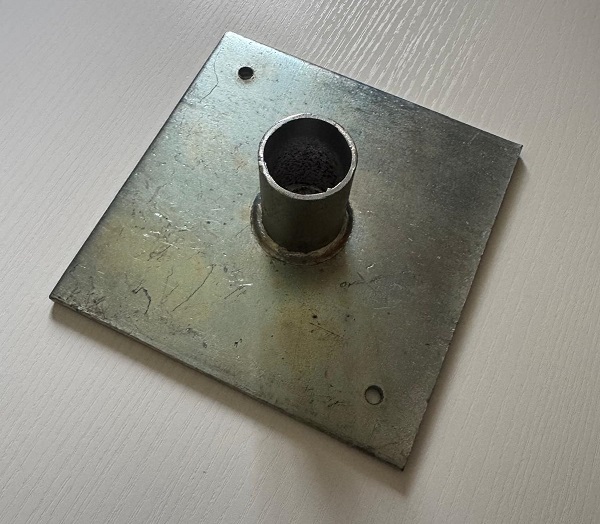
Featuring a robust central spigot that locks 48.3mm scaffold tubes firmly in position, our galvanised base plates come in two practical thicknesses: 2mm for lighter-duty applications on firm ground, and 5mm for maximum strength on demanding or uneven sites. Hot-dip galvanised for long-term outdoor durability, they include pre-drilled holes for secure fixing to timber sole boards, ensuring nothing moves once set up.
Key Benefits & Standout Features
- An exceptional distribution of load helps reduce ground pressure and prevent sinking.
- Features a secure, central spigot (50mm tall, approximately 35mm in diameter) for accurate and stable tube placement.
- Comes with pre-drilled holes for nailing or bolting to sole boards, ensuring maximum stability.
- Hot-dip galvanised coating offers strong resistance to rust, no matter the weather.
- Available in two thickness options: 2mm for lightweight, cost-effective use or 5mm for heavy-duty applications.
- Manufactured in line with BS1139 and BS EN 74 standards, with complete traceability for compliance.
- Compact 150mm × 150mm dimensions make transport, positioning, and storage straightforward.
Start every job with confidence: these galvanised base plates provide a dependable foundation that keeps the entire scaffold safe and compliant.
Product Specifications
| Specification | 2mm Thickness Variant | 5mm Thickness Variant |
|---|---|---|
| Plate Dimensions | 150mm × 150mm square | 150mm × 150mm square |
| Thickness | 2mm | 5mm |
| Central Spigot | 50mm height × 35mm diameter (approx.) | 50mm height × 35mm diameter (approx.) |
| Fits Tube Size | 48.3mm diameter | 48.3mm diameter |
| Material | Heavy-duty pressed galvanised steel | Heavy-duty pressed galvanised steel |
| Approximate Weight | 0.49kg | 0.9kg |
| Standards Compliance | BS EN 74 compatible | BS1139 Section 2.1:1991, BS EN 74 |
| Finish | Hot-dip galvanised | Hot-dip galvanised |
| Fixing Options | Pre-drilled holes for nails/bolts | Pre-drilled holes for nails/bolts |
Frequently Asked Questions
What are the ground conditions and recommended use?
Ground Conditions & Recommended Use
Ground / Site Type | Best Thickness | Recommended Pairing | Primary Reason for Choice |
Firm, flat concrete or tarmac | 2mm | Standalone or with protective tredda | Lightweight, cost-effective, adequate support |
Soft soil, grass, mud, or uneven | 5mm | Timber sole board (essential) | Superior rigidity & enhanced load distribution |
Heavy/tall scaffolds or high loads | 5mm | Sole board + adjustable base jack | Extra strength to handle increased forces |
Short-term indoor or hard-floor use | 2mm | Direct placement | Quick setup with minimal equipment |
Important note: Always use timber sole boards on any ground softer than firm concrete to distribute loads more widely and meet best-practice safety guidelines.
What makes galvanised scaffold base plates essential?
They offer a secure, broad base that ensures even distribution of scaffold weight, safeguards the underlying surface, and prevents pipes from sinking or shifting. Compliance with these measures is both a legal obligation and an essential safety standard for all installations.
When should I pick the 5mm over the 2mm version?
Use 5mm for soft ground, heavy scaffolds, or high durability. Choose 2mm for firm, level sites and lighter work.
Can I fix these in place?
Yes, the pre-drilled holes allow secure nailing or bolting to timber sole boards, preventing any lateral movement during assembly or use.
Do they fit all standard scaffold tubes?
Yes, they fit the standard 48.3mm diameter steel scaffold poles used in UK tube-and-coupler scaffolding.
How do base plates differ from base jacks?
Base plates offer a fixed, low-profile foundation perfect for level ground. Base jacks add height adjustment and levelling for sloping or very uneven sites.
Are these suitable for professional scaffolders?
Yes, they are manufactured to comply with BS EN 74 and BS1139 (with the 5mm version matching BS1139 Section 2.1:1991). These meet the strength and compliance standards for commercial sites.
How many base plates do I need for a scaffold tower or structure?
One base plate per vertical standard (upright tube), every leg of the scaffold requires its own base plate to ensure even load distribution and full stability. For a typical 4-leg mobile tower, you’ll need 4 base plates; for larger setups, count the total number of standards. Always use one under each to comply with safety best practices and prevent uneven settling.
What’s the real difference between a base plate and a sole board (or sole plate)?
A base plate is the steel component (with central spigot) that directly accepts the 48.3mm scaffold tube and spreads the immediate load from the standard. A timber sole board is a larger pad placed under the base plate on soft/uneven ground to distribute weight over a larger area and prevent sinking. Base plates are always required; sole boards are essential on anything softer than firm concrete.
Can I use base plates without sole boards on all ground types?
On hard, level surfaces like concrete, tarmac, or solid flooring, yes, the 2mm or 5mm base plate alone is usually sufficient, but professionals do not recommend it. On soft soil, grass, mud, gravel, or any ground that could compress or settle, you must use timber sole boards beneath the base plates to spread the load further and meet UK safety guidelines; putting them on unsuitable ground risks instability or non-compliance.
How do I properly install or secure the base plate?
Set the base plate on firm, level ground, using a sole board if necessary. Slide the scaffold standard onto the central spigot to ensure proper alignment. Secure it by nailing or bolting through the pre-drilled holes into the sole board; this prevents slipping or movement during use. Before loading, always confirm that the entire setup is both level and stable.
What load capacity can these galvanised base plates handle?
Load capacity varies with ground conditions, soleboard use, scaffold design, and leg spacing. These are made to BS EN 74 and BS 1139 standards for tube-and-coupler scaffolds. The 5mm model resists bending better under heavy or tall setups. Always consult a qualified specialist to determine safe working loads for your project.
Can these base plates be reused, and how long do they last?
Yes, they are made from galvanised steel for durability and rust resistance. Check for damage before each use; with proper care, they’ll last for years.
Do I need special tools to work with these base plates?
No special tools are needed; make sure the tube fits securely over the spigot. A hammer or mallet can help tap tubes in, and nails or bolts can be used to fix them to sole boards if needed. Always wear PPE and follow safe erection procedures.
Q & A
 Base Plate - Scaffold Fitting

Reviews
There are no reviews yet