
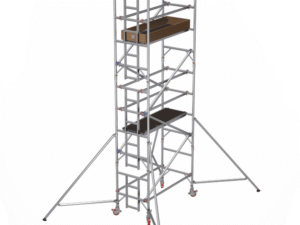
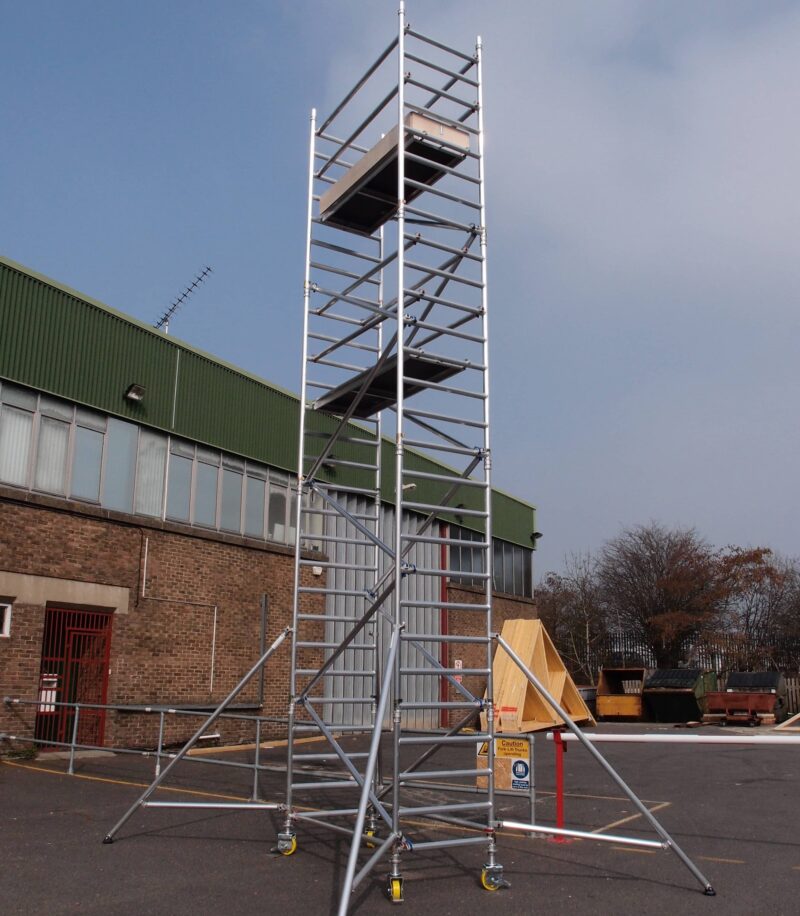


Our industrial aluminium scaffold towers offer safe elevated access for construction, industrial, commercial, and DIY projects and are a versatile alternative to ladders. These freestanding mobile structures feature lockable castors and adjustable legs, providing a sturdy platform you can move without dismantling. Each aluminium tower we sell adheres to UK and European safety standards, including BS EN1004, and supports the 3T (through the trapdoor) assembly method to maximise safety. We stock a range of sizes and configurations:
- Platform heights can be adjusted in 250mm or 500mm increments.
- Length choice of either 1.8m or 2.5m.
- A choice of either single (850mm) or double-width (1450mm) towers.
- Platform heights include: 1.2m, 1.7m, 2.2m, 2.7m, 3.2m, 3.7m, 4.2m, 4.7m, 5.2m, 5.7m, 6.2m, 6.7m, 7.2m, 7.7m, 8.2m, 8.7m, 9.2m, 9.7m, 10.2m, 10.7m, 11.2m, 11.7m, and 12.2m.
Product FAQ's
What is an aluminium scaffold tower?
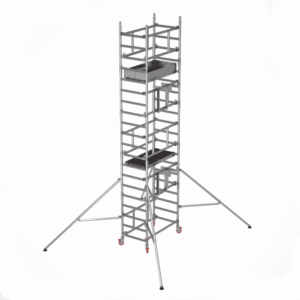
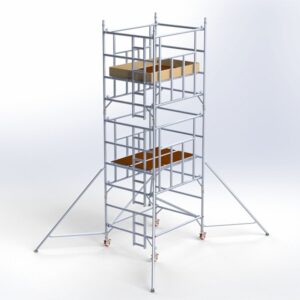
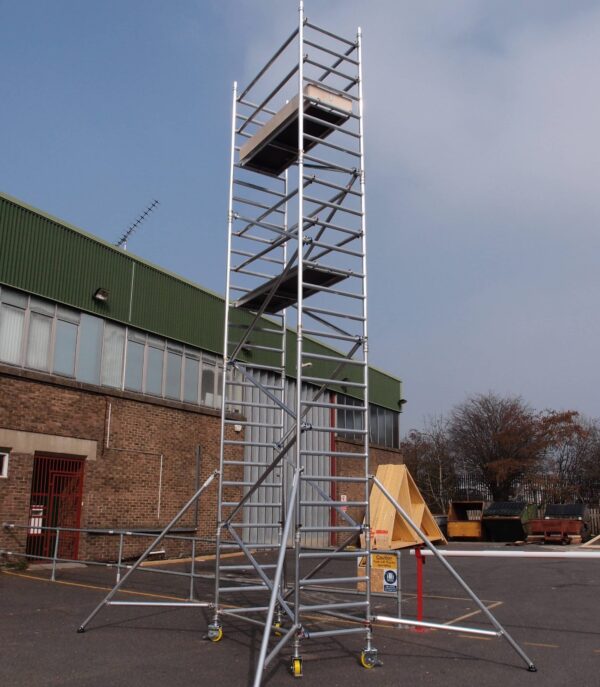
An aluminium scaffold tower is a mobile, freestanding structure built from integrated base frames, guardrails, and anti-slip platforms with locking mechanisms, commonly used for painting, cleaning, and maintenance tasks.
What are the platform adjustment heights of an aluminium scaffold tower?
You can choose between 250mm and 500mm increments, providing flexible height adjustments for any project. Please select your preferred choice from the drop-down menu above.
What lengths and widths are aluminium scaffold towers available in?
These movable towers are available in the following:
- Length: 1.8m and 2.5m.
- Width: Single (0.85m) and double width (1.45m).
For restricted areas where even a standard single-width tower is too wide, our narrow scaffold tower with 500mm platform width provides a compact access solution for working safely in tight spaces.
What platform heights are aluminium scaffold towers available in?
The platform heights available for aluminium scaffold towers include: 1.2m, 1.7m, 2.2m, 2.7m, 3.2m, 3.7m, 4.2m, 4.7m, 5.2m, 5.7m, 6.2m, 6.7m, 7.2m, 7.7m, 8.2m, 8.7m, 9.2m, 9.7m, 10.2m, 10.7m, 11.2m, 11.7m, and 12.2m. This wide range of heights lets users choose the most suitable level for their project, whether for construction, maintenance, or DIY tasks.
What is the difference between an industrial scaffold tower and a standard scaffold tower?
The main difference between an industrial scaffold tower and a standard scaffold tower lies in their design and purpose. Industrial towers are generally heavier and more robust, built for demanding industrial environments. In contrast, standard mobile towers are lighter and better suited for general DIY and commercial jobs.
What are mobile scaffold towers typically made from?
These towers are primarily made from prefabricated aluminium.
What are the key safety features to look for in an aluminium scaffold tower?
When picking an aluminium tower, safety is crucial. Here are the key features to look for:
Standards compliant: Ensure the tower you choose meets BS EN 1004:2020 standards and the Work at Height Regulations 2005.
Safe erection: Look for Advanced Guardrail (AGR) or Through the Trapdoor (3T) installation methods to ensure guardrails are in place before you step onto the platform.
Fall protection: Any scaffold tower you purchase must have guardrails and toe boards to prevent falls and stop tools from dropping.
Stability: Stabilisers or outriggers are essential for increasing stability, especially for taller towers or outdoor use.
Secure: Most towers will have locking castors to keep the tower firmly in place.
Non-slip platforms: Choose a scaffolding tower with a non-slip working surface.
Durable materials: Only choose a tower made from high-quality materials like aluminium, which offers superior strength and durability.
Secure connections: All components need secure locking devices.
Clear load limits: Look for load capacity labelling indicating the maximum safe weight.
Can aluminium scaffold towers be used outdoors in all weather conditions?
These towers are suitable for outdoor use, but certain weather conditions may prevent their use, such as:
Wind speeds: Stop work and dismantle the tower if the average wind speed hits 17 mph (Beaufort Force 4). Strong winds put significant stress on the tower, making it unstable and likely to overturn.
Sheeting and netting: Never attach any netting, boards, or sheeting to the tower. They act like sails, which can cause the tower to topple even in light winds.
Heavy rain and snow: Avoid working in heavy rain or snow. These conditions create slippery surfaces and reduce visibility, making it unsafe.
Ground conditions: Always ensure the ground is firm and level. Wet or icy conditions can compromise the tower’s stability.
Always check current and forecast weather conditions in your risk assessment.
What uses do aluminium scaffold towers have?
Aluminium mobile scaffold towers are ideal for a wide range of uses that require safe, temporary access at height. They are commonly used for construction and maintenance tasks such as painting, electrical work, roof repairs, and general building upkeep, thanks to their portability and ease of assembly. In industrial environments, these towers support activities like machinery maintenance, inspections, and cleaning inside factories or plants.
They are also frequently employed in event setups and commercial spaces for installing signage, setting up stages, or performing high-level cleaning. In essence, whenever you need a stable, mobile elevated platform for short- to medium-term projects that involve frequent repositioning, aluminium scaffold towers offer a practical, efficient solution.
For a wider choice of mobile access equipment, browse our aluminium scaffold towers for indoor and outdoor projects, available in various working heights and platform sizes for safe access at height.
What is the maximum weight capacity of a typical mobile scaffold tower?
If you need a stable platform for workers, tools, and materials for short- to medium-term projects, especially where you need to move around, an aluminium scaffold tower is often the most practical and efficient choice. The maximum weight capacity of scaffold towers can vary significantly by model and manufacturer. However, towers from reputable brands that meet BS EN 1004:2020 standards typically offer:
- A safe working load (SWL) of around 275 kg per platform level.
- The maximum load per tower can range significantly. Some heavy-duty aluminium towers can hold a substantial 950 kg (including the tower’s weight), and up to 3,000 kg (3 tonnes) when using base jacks for enhanced stability instead of castors.
Do I need a licence to use an aluminium scaffold tower?
Yes, under the Highways Act 1980, you must get a licence from the Highway Authority to place a scaffold tower on a public pavement, regardless of how long it stays.
Under what circumstances is it unsafe to use an aluminium scaffold tower?
Do not use an aluminium tower if there are strong winds, missing or broken parts, or if you are using it to support ladders, trestles, or other equipment.
Why should you never climb an aluminium tower scaffold on the outside?
Climbing up the outside of a tower or leaning a ladder against it to access the platform can cause instability and increase the risk of the tower overturning. Avoid both options entirely.
Q & A
 Industrial Ladderspan Aluminium Scaffold Tower


Reviews
There are no reviews yet