
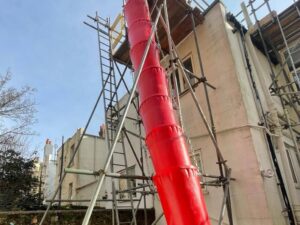


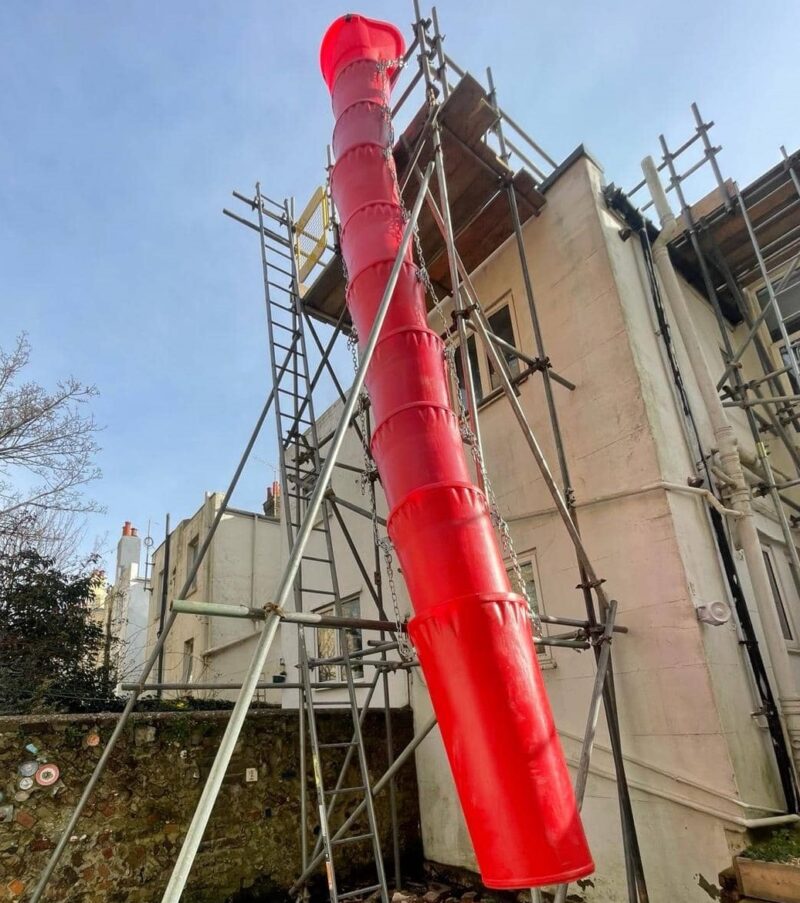

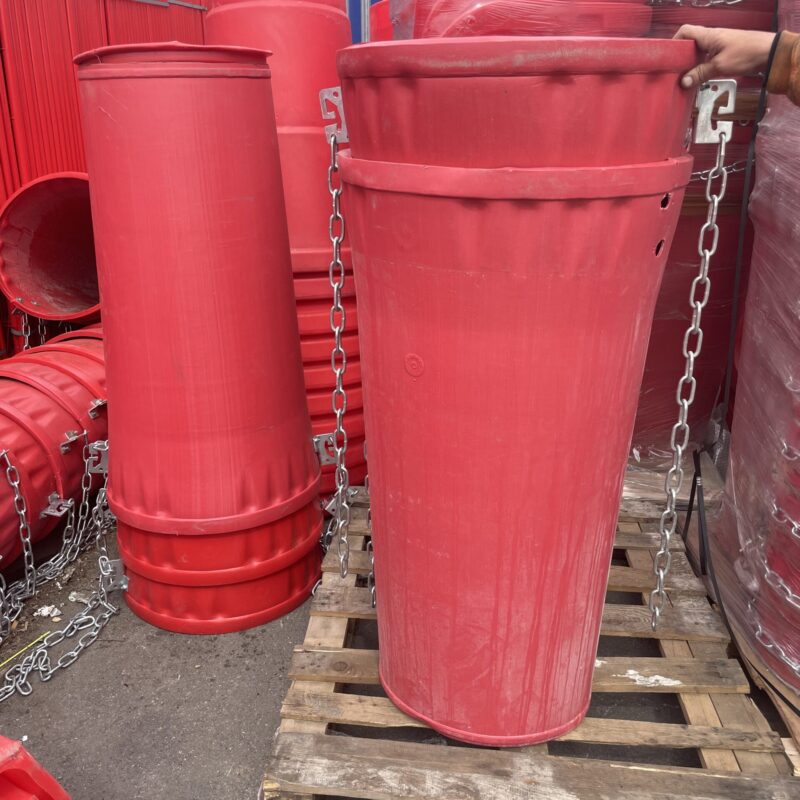


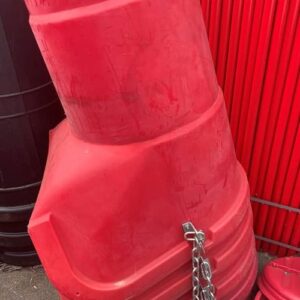
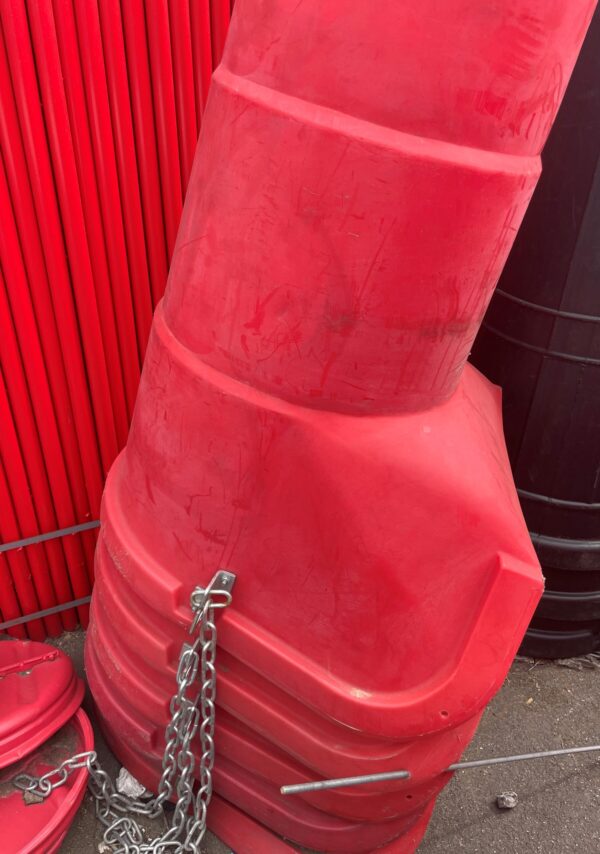
Rubbish chutes are essential for maintaining clean and safe construction sites and multi-storey buildings. Attached to scaffolding, they provide a simple and effective way to move waste and debris from higher floors directly into a skip on the ground.
Our system consists of several components:
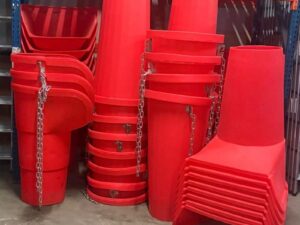
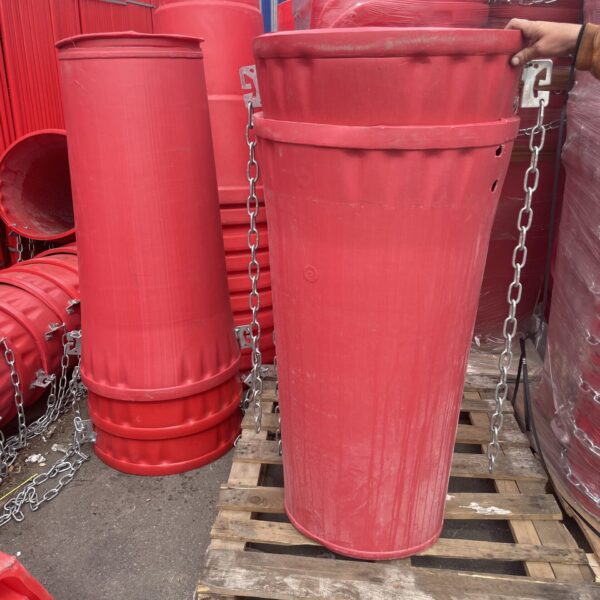
- Rubbish chute sections.
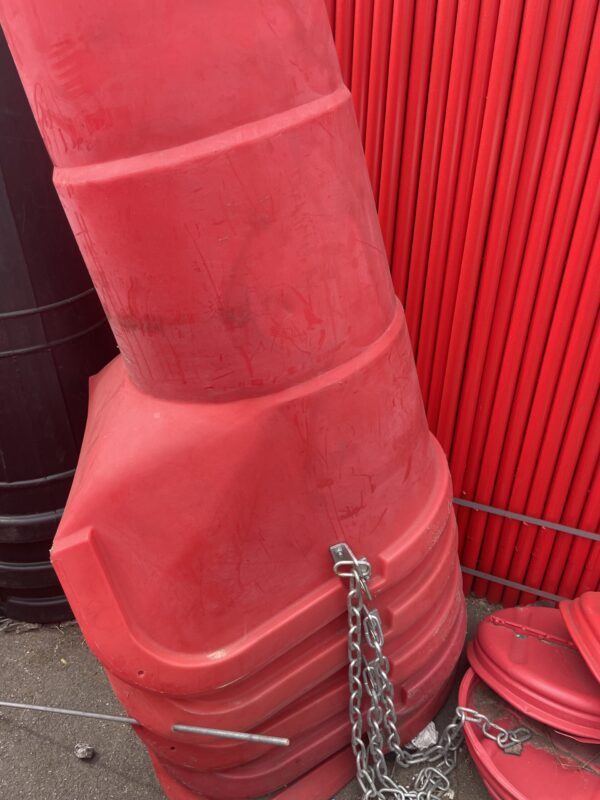
- A top hopper.
- A side-entry hopper.
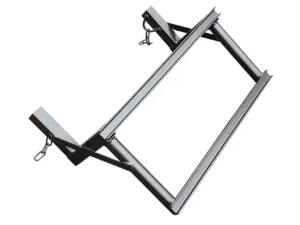
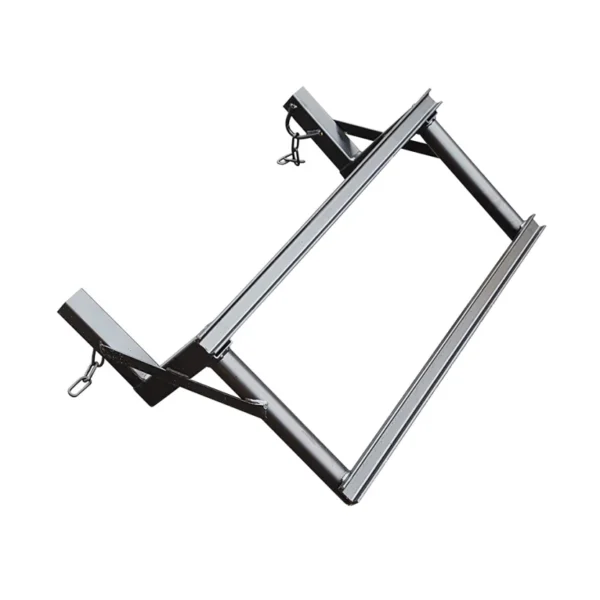
- A fixing frame.
When assembled, these parts create a straightforward solution for the fast, safe, and efficient disposal of waste materials.
Guides
Product FAQ's
What are the dimensions of the rubbish chute system components?
The dimensions of the different components of a rubbish chute system are as follows:
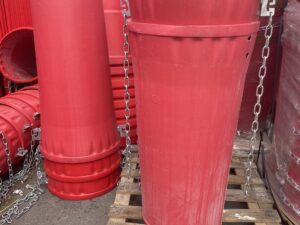
Rubbish chute section: This is approximately 1.1m long and 20 inches in diameter, tapering to 16 inches.
Top hopper: This is also 1.1m long and 20 inches in diameter, tapering down to 15.7 inches.
Side entry hopper: This component is around 1220mm long with a top width of 560mm.
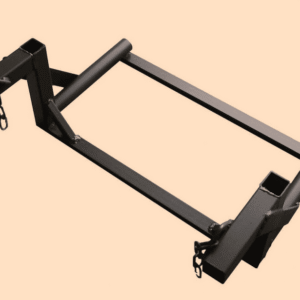
Universal fixing frame: This part is approximately 20 inches wide.
What is a rubbish chute system?
A rubble chute system consists of connected, round sections linked by chains and suspended from a building or scaffold, allowing debris to be safely transferred from various levels to a skip below.
What benefits does a rubbish chute offer on a construction or demolition site?
Rubbish chutes offer many key advantages for construction and demolition projects:
The chutes facilitate faster waste removal by reducing the time and effort required to transport debris from upper floors to the ground level.
Rubbish chutes reduce risks by providing a secure way to dispose of heavy debris, avoiding manual handling on stairs or tight spaces and preventing falling waste.
This system provides cost savings by reducing labour and improving efficiency, while its waste containment limits potential impact on surrounding areas.
A rubbish chute keeps the work site clean and tidy by centralising waste disposal and minimising clutter and hazards.
Chutes help to limit the amount of dust, debris, and noise produced during rubble removal.
Rubbish chutes enable fast waste removal and site cleanup, lowering environmental impact. They also promote easier segregation and recycling.
Can I change the length of a rubbish chute for my project?
Yes, chute sections can be assembled to the required length using fixing frames and linking chains, making them suitable for various site requirements.
What are the standard elements of a rubbish chute system?
A standard chute system efficiently transports waste using these main components:
- Top hopper.
- Chute sections.
- Support bracket.
- Side entry section.
What design features are incorporated into rubbish chutes to minimise the risk of blockages?
These waste removal systems are built to reduce blockages by featuring:
Appropriate diameter: The chute is constructed with a diameter that reduces the likelihood of waste becoming obstructed.
Straight or gentle curves: Chutes should be straight or slightly curved to prevent waste from sticking in sharp bends.
Ventilation: Prevents waste compaction and directs lighter waste down the chute.
Top hopper design: The top hopper includes smooth edges and an angled structure that directs waste into the chute, reducing the chance of snags or falling debris.
What factors should be taken into account when installing a rubbish chute system?
Careful planning is necessary to maintain safety, efficiency, and compliance when using a rubbish chute system:
Secure anchoring: Given their typical exterior vertical installation, rubble chutes must be robustly anchored to resist wind loads and prevent structural failure. It is imperative to conduct a thorough structural assessment to verify that the building or scaffold can adequately support both the weight and the dynamic forces exerted by the chute.
Heavy-duty materials: Construction debris like concrete, bricks, and metal are heavy and abrasive, so chutes must be made from strong materials such as reinforced polymers that resist impact and abrasion.
System design: The chute system must be designed to handle the calculated weight and volume of debris, ensuring stability and preventing overload.
Worker and public safety: Secure loading and discharge zones should be established. All workers should be trained in chute safety and must cordon off the area below the chute to protect the public.
Considering these factors ensures a safe and efficient debris chute system.
What maintenance does a rubbish chute system need?
For safe, efficient, and long-lasting operation, consistent maintenance is paramount:
Routine inspections: Perform regular visual assessments to detect damage, loose connections, and obstructions, with specific attention to chute sections, joints, anchors, and discharge areas.
Cleaning for efficiency: Clean chutes after every use or at the end of each day to prevent blockages and ensure optimal function.
Component upkeep:
Anchoring: Check bolt tightness, inspect for corrosion, and replace any damaged components.
Chute sections: Examine for signs of damage, such as dents or cracks, and replace any compromised sections without delay.
Intake and discharge: Operate doors/hoppers smoothly; lubricate parts as needed.
Safety rules:
Barriers: Always check safety barriers and warning signs for correct placement and condition.
Training: Confirm all workers are trained on safe chute use.
Emergency: Ensure you set and share emergency procedures.
What common issues affect rubbish chute systems?
Construction and demolition debris chutes have characteristics that differ from standard rubbish chutes. The following section outlines typical issues encountered and their corresponding solutions:
Blockages:
Issue: Debris that is large or irregularly shaped, such as concrete, metal, or lumber, may lead to jams.
Solutions: Pre-sort debris to eliminate issues and use wider chutes when feasible.
Damage due to impact:
Issue: The chute sections can be compromised or damaged by exposure to heavy or sharp debris.
Solution: Fortunately, the materials we use for our rubbish chute systems are heavy-duty and typically resistant to these types of exposure or damage.
Managing the distribution of dust and debris:
Problem: Debris disposal generates dust that may escape.
Solutions: Use water spray or enclosures to control dust and cover skips to contain debris.
Q & A
 New Rubbish Chute System – Hoppers, Sections and Frame


Reviews
There are no reviews yet