What is Heras fencing?
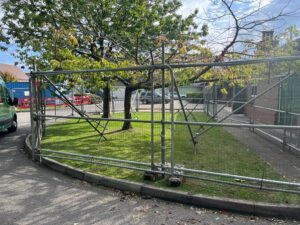
Heras fencing, also known as temporary fencing, is designed to create a secure perimeter on construction sites, at events, and other locations that require a secure temporary enclosure. Heras fences are straightforward and fast to install, dismantle and transport. This fencing system is made from welded wire mesh, and the fence panels’ bottom ends are slotted into the feet, whilst each panel is connected using clips.
Why do you need Heras fencing?
Construction sites: Heras fencing is your first line of defence, securing the site’s perimeter, protecting materials and equipment, and, most importantly, preventing unauthorised access and injury, ensuring your site’s safety.
Events: Festivals, concerts, sporting events, or any public event where crowd control and access management are necessary.
Enclosures: Heras fences are not just barriers; they are versatile tools that can create temporary barricades or enclosures for storage, parking, or to separate livestock, offering you the flexibility you need.
Security: Heras fencing is your reliable partner in deterring and preventing vandalism, theft, and unauthorised access to areas deemed unsafe, providing you with the peace of mind you need.
Heras fencing is a popular choice for creating secure temporary boundaries, but its versatility extends far beyond simple perimeter control. Learn more about the many uses of Heras fencing across construction sites, public events and infrastructure projects.
What components make up a temporary fencing barricade?
Panels: These are not just panels; they are robust, heavy-duty galvanised steel constructions that ensure a reliable, durable solution. The strength and durability of a temporary panel measuring 3.45m in length, 2m in height, and weighing approximately 14kg provide a sense of security and confidence in the product’s quality. The thermoplastic rubber fencing feet are made from 100% recycled plastic. They are used to create a stable base for the panels and gates. Hi-visibility feet are also available.
Couplers: The fence clips connect two panels. You can either use standard clips or anti-tamper lockable clips.
Vehicle gates: Serve as entry and exit points for vehicular access. They measure 4.2m, come in pairs and offer complete security with a sliding locking latch.
Pedestrian gate: Allows controlled access for pedestrians and workers to sites or events; it is anti-climb and helps prevent unauthorised access.
Stabilisers: The fencing stabilisers ensure your fencing perimeter is fully supported and stable. They connect to the panels via the fencing clips and are secured to the ground. It is recommended to use 1 stabiliser per panel.
Soil pins: These are used to secure stabilisers into soft ground, such as grass or soil. It is recommended that two soil pins be used per stabiliser.
Concrete blocks: The reinforced concrete ballast blocks weigh approximately 50kg and are placed on the rubber feet to weigh the fencing down. These are covered in high-visibility yellow plastic and can be stacked to increase their weight. They are ideal for windy locations to prevent the fences from being knocked over.
How do you create a heras fencing perimeter?
- Once you have calculated how many panels you need for your perimeter, here is a quick guide to installing them. Please refer to the accompanying diagram for a visual representation of the process:
- Ensure the ground/area is clear and level. It’s essential to remove any debris or obstacles to prevent tripping hazards during installation.
- Place the feet on the ground approximately 3.45 metres apart around the area you wish to create a secure perimeter.
- Place the panels, vehicle gates, and pedestrian gates into the feet, which have specific holes to secure them.
- Fix the clips to the top and bottom of the fencing, and, if using stabilisers, connect them to the clips.
- Secure the stabilisers to the ground by hammering the soil pins into the holes on the base plate. This step is crucial as it ensures the stabilisers are fixed in place, providing stability to the fence.
- Add any other accessories, including concrete blocks, debris netting for privacy, locks, or barbed wire, to each panel where needed.
What are the benefits of temporary Heras fencing?
Temporary fencing offers many benefits, making it a popular choice for creating secure perimeters. Here are some of the benefits:
Strength and durability: They feature a robust construction of heavy-duty galvanised steel, making them highly resistant to harsh weather conditions, including rain, wind, and extreme temperatures. These panels can last many years, reducing the need for frequent replacements.
Security: Temporary fencing is not just a barrier, but a shield that deters unauthorised access. It can be customised to enhance its security features, including barbed wire, razor wire, or electrical fencing, providing a high level of protection.
Versatile: Temporary Heras fencing is not just for construction; it is a versatile solution suitable for a wide range of settings. This adaptability ensures the fence system can serve as either a temporary or permanent solution, meeting your changing needs and offering flexibility.
Site privacy: Temporary fencing can also be used to prevent passersby from seeing the site. The panels can be covered in debris netting, scaffold sheeting, or heras fence covers that can be customised with your branding or advertising.
Fast installation and dismantling: This type of fencing is exceptionally straightforward to install and dismantle, saving time and resources for busy construction sites and events that require a secure perimeter quickly. This efficiency provides the audience with a sense of relief and convenience.
How many Heras panels, feet and clips do I need for my fence system?
Calculating the number of Heras panels, feet, and clips for your fence system is straightforward. Simply measure the length of your perimeter and divide it by the width of the fence panel (3.45 metres). Then, determine the feet and clips required to attach your panels.
Feet: These support the panels and keep them upright. Use one foot per panel to create an enclosed perimeter; however, you will need one extra foot for a straight run. For example, a straight run of 4 panels would require 5 feet. For an enclosed perimeter of 4 panels, only 4 feet would be needed. Clips: These are used to connect the panels for a secure fit, one at the top and one at the bottom.
Calculating the number of Heras panels, feet, and clips for your fence system is a simple process. Measure the metres needed for your perimeter, divide by the panel width, and determine the feet and clips required. With these steps, you can confidently plan your fence system.
Not sure what you need?
Heras fencing offers a cost-effective, reliable and secure solution for various applications. If you are considering temporary Heras fencing to create a safe perimeter for your project, why not contact our team of experts who can help you determine the best solution for your needs?
Recent posts