


Essential Scaffolding Conversion Tool
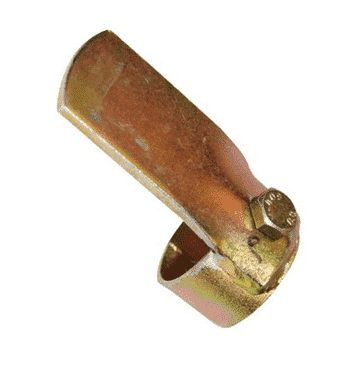
The Putlog Head Adaptor (also known as a spade-end adaptor) is a specialised scaffolding fitting that converts 5ft scaffold poles into transom putlogs. It securely attaches to the end of the tube, creating a spade-shaped end that slots directly into masonry joints such as brick or blockwork.
This allows the scaffold to be “tied in” to the building wall, providing essential stability for ledger tubes and working platforms, particularly during new-build bricklaying and other masonry work.
Made from durable, pressed galvanised steel and compliant with BS 2482:2009, the putlog head adaptor is a non-load-bearing fitting ideal for quick, secure scaffold-to-wall connections.
Key Features and Benefits of the Putlog Head Adaptor
The Putlog Head Adaptor combines simplicity and strength, offering essential advantages for scaffolding applications:
- Versatile Tube Conversion: Converts 5ft standard scaffold or 48.3mm aluminium tubes into putlogs, maximising your existing inventory.
- Secure Bolt Mechanism: Features a reliable bolt-tightening system for a firm, stable hold on tube ends.
- Masonry Integration: Designed for easy insertion into brick or block walls, providing a strong tie-in for scaffolding.
- Lightweight Design: Weighs only 0.40kg, making it easy to handle and transport while maintaining durability.
- Standards Compliance: Meets BS 2482:2009 for quality and safety.
- Eco-Friendly Materials: Made from sustainably sourced materials, aligning with green construction practices.
- Compatibility: Works with both steel and aluminium tubes (verify load ratings for your project).
These features enhance scaffolding efficiency and safety, making the Putlog Head Adaptor a reliable choice for any project.
Technical Specifications
To help you assess compatibility and performance, here’s a detailed breakdown of the putlog head adaptor’s specs:
Specification | Details |
Material | Pressed galvanised steel, zinc-plated |
Tube Compatibility | 48.3mm diameter (steel or aluminium) |
Weight | 0.40kg (approximate) |
Load Bearing | Non-load-bearing |
Compliance | BS 2482:2009 |
Type | Pressed |
Condition | New |
Frequently Asked Questions (FAQs)
How can the putlog head adaptor be best utilised for different scaffolding applications?
Understanding where and how to deploy the putlog head adaptor can optimise your scaffolding strategy. Below is a table outlining common applications and best practices:
Application Area | Usage Tips |
New-Build Brickwork | Insert fresh masonry to secure transoms; fully tighten bolts for maximum grip. |
Progressive Site Work | Use as a temporary tie-in during phased construction; compatible with ledgers for wall support. |
Aluminium Tube Setups | Check load ratings prior to use; ideal for lighter scaffolds where weight reduction is key. |
General Scaffolding Ties | Combine with other fittings, such as couplers, for comprehensive stability; avoid overloading. |
This guide ensures you get the most out of the adaptor while adhering to safety protocols.
What is a putlog adaptor used for?
It’s primarily used to convert standard scaffold tubes into putlogs, which are then embedded in building walls to securely tie the scaffold structure, enhancing stability for bricklaying and similar tasks.
Can this adaptor be used with aluminium scaffolding tubes?
Yes, it works with 48.3mm-diameter aluminium tubes, but it’s essential to review the load ratings to ensure they meet your project’s requirements.
Is the putlog head adaptor load-bearing?
No, it’s designed as a non-load-bearing fitting focused on connection and stability rather than supporting heavy weights.
How do I install the Putlog adaptor?
Simply place it on the end of a compatible tube and tighten the bolt to secure it. Then, insert the putlog end into the masonry joint.
What standards does this product comply with?
It adheres to BS 2482:2009, ensuring it meets industry benchmarks for quality and safety in scaffolding components.
What is the difference between a putlog adaptor and a putlog coupler?
A putlog head adaptor attaches directly to the end of a scaffold tube, creating a “spade-end” or putlog for insertion into masonry walls and converting standard tubes into tie-in points for the building. A putlog coupler, also called a single coupler, connects a putlog or transom tube to a ledger at a right angle without modifying the tube end. Use the adaptor for wall integration; use the coupler for ledger connections.
Is the putlog head adaptor the same as a spade end or putlog head?
Yes, it’s often called a putlog head, a spade-end adaptor, or simply a putlog adaptor. All refer to the same pressed-steel fitting that attaches to a 48.3mm tube to form a putlog for embedding into brick/block joints.
Can I use the putlog head adaptor on second-hand tubes?
Yes, you can use the putlog head adaptor on second-hand tubes if they are in good condition. The used scaffolding tube must have a standard 48.3mm diameter, be straight, and show no significant rust, deformation, or damage.
Always inspect the tube carefully for straightness and structural integrity before fitting the adaptor. Ensure the fixing bolt tightens securely to achieve a firm, slip-free grip.
How do I remove the putlog head adaptor after use?
Loosen the securing bolt fully, then slide or tap the adaptor off the tube end. It’s a simple process, but avoid forcing it if seized. Apply penetrating oil if needed, then clean and store in a dry place to prevent corrosion of the galvanised finish.
Are there alternatives to using a putlog head adaptor?
Traditional forged or fabricated putlogs with built-in spade ends are an option, but they’re less flexible since you can’t repurpose standard tubes. For non-masonry setups or independent scaffolding, you might skip putlogs entirely and use transoms with double couplers. The adaptor shines when you want to maximise your existing tube stock for cost-effective bricklaying scaffolds.
What torque or tightening method should I use for the bolt?
Tighten the bolt firmly by hand with a scaffold spanner or ratchet until secure (no specific Nm torque is universally quoted for this non-load-bearing fitting, but aim for snug without over-stressing the pressed steel). Follow HSE guidelines and always check for any movement after installation.
Will using putlog adaptors leave holes in the finished wall?
Yes, when inserted into mortar joints during progressive brickwork, they create temporary putlog holes. These are typically filled and pointed during final masonry work to match the wall plan for minor repointing, ensuring a clean finish and preventing water ingress.
How many putlog heads do I need per lift or project?
It depends on your scaffold design, but in standard putlog setups, place putlogs at intervals matching board lengths (e.g., every 1–2m along the ledger) and at each level where tying is required. Consult a scaffold design or TG20:21 guidelines for spacing to ensure stability.
Q & A



Reviews
There are no reviews yet