


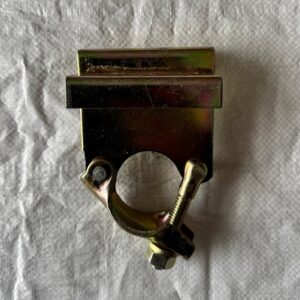
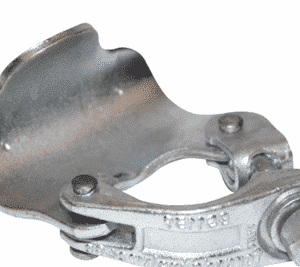
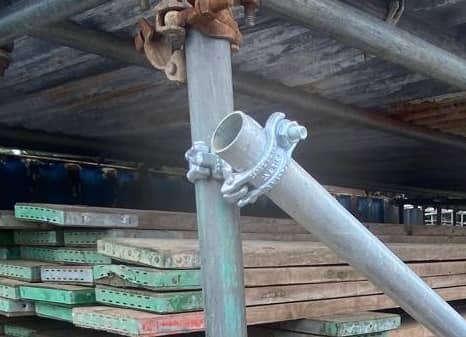
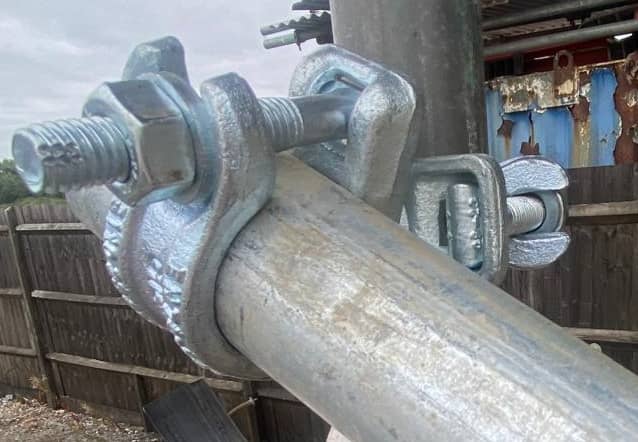
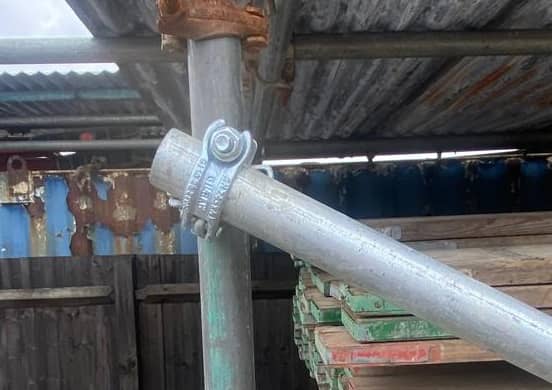
This swivel coupler, also called a swivel fitting or clamp, connects 48.3mm scaffolding tubes at variable angles, providing flexibility where fixed couplers can’t. Ideal for diagonal and sway bracing, it strengthens scaffolding frameworks by linking braces to standards at almost any angle.
Constructed from drop-forged galvanised steel, it features a 360°-rotating pin that allows full rotation while maintaining load-bearing stability. Durable, corrosion-resistant, and compliant with BS 1139 and EN 74-1, it delivers reliable support for construction, maintenance, and renovation projects.
Creating a sturdy structure using the right couplers
While swivel couplers offer the flexibility you need for diagonal bracing, our right-angle double couplers create solid 90° connections between horizontal ledgers and vertical scaffolding standards. When combined with other scaffold clamps and connectors and 48.3mm steel scaffolding poles, they create safe and sturdy structures.
Key Benefits and Features of Our Swivel Couplers
Investing in premium swivel couplers boosts the safety, adaptability, and durability of your scaffolding projects. Key benefits include:
Versatile Angle Connections: Thanks to their 360-degree swivel design, these couplers enable tubes to be joined at any angle—ideal for complex structures or when fixed angles aren’t suitable.
Robust Load Capacity: Designed to withstand slip resistance up to 6.25kN with a tightening torque of 54Nm, providing dependable support in professional settings.
Corrosion-Resistant Design: Featuring zinc galvanisation to protect against rust and weathering, these couplers remain reliable even in harsh outdoor environments.
Compatibility and Ease of Use: They fit 48.3mm steel or aluminium scaffold tubes and have two open sections allowing full-length tubes to pass through effortlessly.
Compliance and Quality Assurance: Produced to BS1139 and EN74-1 standards, these couplers meet UK and European safety regulations, providing added confidence on the job.
Maintenance-Friendly: Regular lubrication with products like scaffold clip lub ensures smooth operation, while proper storage extends their lifespan.
Lightweight Yet Sturdy: At just 1.05kg, these couplers are easy to handle without sacrificing strength, helping reduce fatigue during installation.
With these advantages, our swivel couplers are trusted by both professionals and DIY users, backed by over ten years of experience supplying scaffolding solutions throughout the UK.
Swivel Coupler Specifications
| Specification | Details |
|---|---|
| Condition | New |
| Tube Compatibility | 48.3mm diameter |
| Material | Galvanised steel (zinc-coated) |
| Manufacturing Type | Drop forged |
| Approximate Weight | 1.05kg |
| Standards Compliance | BS1139 and EN74-1 |
| Load Limit | 6.25kN slip resistance at 54Nm torque |
Frequently Asked Questions (FAQs)
How does a swivel coupler fit into scaffolding systems?
Aspect | Description |
Compatible Tubes | Steel or aluminium scaffolding poles (48.3mm) |
Primary Uses | Attaching sway braces to front bays; connecting diagonal braces (e.g., 8ft tubes) to standards |
Installation Tips | Tighten to 54 Nm; apply lubricant for smooth rotation; store in a dry place. |
Related Accessories | Girder clamps, base plates, double couplers, single putlog couplers |
Safety Considerations | Always inspect before use; comply with HSE work-at-height regulations. |
Purchase Options | Individual units or bags of 50; nationwide delivery in 2-5 working days |
What is the main purpose of a swivel coupler in scaffolding?
Swivel couplers are primarily used to connect scaffold tubes at adjustable angles, such as for diagonal bracing or sway supports, offering greater flexibility than fixed couplers.
Are these suitable for aluminium scaffolding tubes?
Yes, they are fully compatible with 48.3mm-diameter aluminium poles and standard steel tubes, ensuring versatility across scaffolding materials.
Is there a weight limit or load capacity I should be aware of?
Each coupler supports a typical 6.25 kN load against slip when tightened to 54 Nm, making it suitable for load-bearing applications in stable scaffolding setups.
Can I use a swivel coupler instead of a double (right-angle) coupler?
No, they serve different purposes. A swivel coupler allows flexible connections at any angle (ideal for diagonal bracing and sway braces). In contrast, a double coupler provides a rigid, fixed 90-degree joint for the primary load-bearing framework, such as standards and ledgers. Swivel couplers are not typically used for main structural joints unless specified in the design — always follow engineering guidelines and HSE regulations.
What’s the main difference between a swivel coupler and a double coupler?
- Swivel Coupler: Offers 360-degree rotation for variable angles; primarily for bracing (e.g., diagonal supports) and secondary connections.
- Double Coupler: Fixed at 90 degrees; higher rigidity and load-bearing capacity for the main framework. Swivel couplers provide versatility but are generally recommended for reinforcement rather than primary support.
Are swivel couplers suitable for load-bearing applications?
Yes, they are load-bearing, with a slip resistance of 6.25 kN at 54 Nm of torque, but they are best suited for bracing and diagonal applications rather than for primary vertical/horizontal joints. For maximum stability in main structures, use double couplers where appropriate.
How do I install a swivel coupler correctly?
Position the coupler so the bolt/nut is on top where possible (to use gravity for initial placement), tighten to 54Nm using a scaffolding spanner or impact wrench, and ensure smooth rotation before locking. Always inspect the pin for wear and apply lubricant if needed.
Can they be reused, and how long do they last?
Yes, they are fully reusable if undamaged. With proper storage in dry conditions, regular lubrication (e.g., scaffold clip lub), and inspections for rust, wear, or bent parts, they can last many years. Galvanisation helps resist corrosion, but never use damaged fittings.
Do I need to orient it in a specific direction?
While not strictly mandatory, best practice is to have the bolt on top and the “clamshell” portion facing downward to ease rough-in during assembly and help prevent roll-out under load.
Are there different grades or types of these fittings (e.g., pressed vs drop-forged)?
Our swivel couplers are drop-forged galvanised steel for superior strength. Drop-forged versions are generally stronger than pressed alternatives, making them ideal for professional UK sites complying with BS1139 and EN74-1.
Can they be used with other scaffold fittings in the same structure?
Yes, it’s common to mix types—for example, using double couplers for the main frame and swivel couplers for diagonal bracing. Always ensure compatibility (48.3mm tubes) and follow a competent person’s design.
What should I do if the swivel action feels stiff or loose?
Apply a specialised lubricant, such as scaffold clip lub, to the swivel pin. If it’s excessively worn or doesn’t lock firmly, replace it immediately to maintain safety.
Video
Q & A





Reviews
There are no reviews yet