

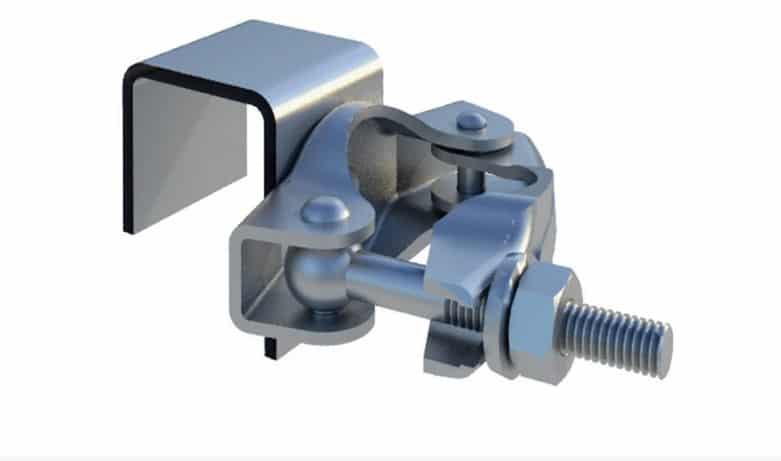


Your Essential Solution for Secure Site Perimeters
The Hoarding to Scaffold Coupler is a crucial fitting for anyone responsible for site security and temporary fencing. Designed to securely attach metal hoarding panels 2140mm x 1980mm to 48.3mm-diameter steel scaffolding tubes, this reliable galvanised connector creates a stable boundary around construction sites, event spaces, and industrial zones, protecting against wind, impacts, or tampering and ensuring your perimeter stays intact, even in tough conditions.
Whether you’re setting up barriers at a festival or reinforcing a building project, this coupler (also known as the DK90, hoarding clamp, or scaffold tube-to-hoarding fitting) offers quick installation and durable performance. Built to meet BS 2482:2009 standards, it’s made from high-quality pressed steel to withstand outdoor environments, all while enhancing safety and efficiency.
Key Features and Benefits of the Hoarding to Scaffold Tube Coupler
Discover why this coupler stands out as a practical solution for enhancing hoarding stability. Its design prioritises ease of use, durability, and compatibility, helping you maintain secure perimeters without unnecessary complexity.
- Enhanced Stability and Security: Firmly attaches hoarding panels to scaffolding, preventing unauthorised access and accidental displacement, especially in high-traffic or exposed areas.
- Weather-Resistant Construction: Built from pressed steel, it withstands harsh weather conditions, ensuring reliable performance year-round.
- Universal Compatibility: Compatible with most temporary hoarding systems and standard 48.3mm scaffolding tubes, eliminating the need for specialised equipment.
- Quick and Simple Installation: Can be installed and tightened with a standard scaffold spanner; no advanced tools or expertise required, allowing for rapid setup and adjustments.
- Sustainable and Compliant Design: Responsibly sourced and meets BS 2482:2009 specifications, supporting eco-friendly practices while ensuring safety.
- Non-Load-Bearing Versatility: Ideal for perimeter control in non-structural applications, offering.
Technical Specifications
For a clear overview of the product’s build and dimensions, refer to the table below. These specs ensure it fits standard setups while providing the robustness needed for real-world use.
Specification | Details |
Material | Pressed Steel |
Tube Compatibility | 48.3mm Diameter |
Height (approx.) | 52mm |
Width (approx.) | 140mm |
Depth (approx.) | 170mm |
Weight (approx.) | 1.6kg |
Condition | New |
Load Bearing | No |
Standards Compliance | BS 2482:2009 |
Frequently Asked Questions (FAQs)
How do I install the hoarding-to-scaffold tube coupler?
To help you get started quickly, here’s a step-by-step breakdown in table format. This guide ensures proper attachment and maximises the coupler’s effectiveness:
Step | Action Description |
1 | Position the scaffolding tube (48.3mm) into the coupler’s tube-holding section. |
2 | Align the other section of the coupler with the edge of the hoarding panel. |
3 | Tighten the integrated bolt using a scaffolding spanner until secure. |
4 | Check for stability by applying gentle pressure; adjust if needed. |
Following these steps typically takes just minutes, making it efficient for large-scale setups.
What is a hoarding-to-tube coupler used for?
It’s primarily used to connect temporary hoarding panels to scaffolding tubes, creating a stable perimeter that resists movement from weather or external forces. This is crucial for safety at construction sites, festivals, and industrial areas.
Is this coupler compatible with all hoarding systems?
Yes, it integrates with most standard temporary hoarding setups and 48.3mm galvanised steel tubes, offering broad versatility without custom modifications.
How does it ensure compliance and safety?
Manufactured to BS 2482:2009 standards, it undergoes rigorous testing for durability and reliability, helping sites meet regulatory requirements for secure boundaries.
Can it handle outdoor exposure long-term?
Yes, its pressed-steel construction is designed for weather resistance, making it suitable for extended use in varying conditions without rust or degradation.
What tools do I need for installation?
Just a basic scaffolding spanner is required, no power tools or specialised equipment, which keeps the setup cost-effective and straightforward.
Is this a load-bearing component?
No, it’s intended solely for stability and security, not for supporting heavy loads. For load-bearing needs, consider other specialised fittings.
How many hoarding-to-scaffold couplers do I need per panel?
The exact number depends on panel size, wind exposure, and site conditions. Still, a common recommendation is 2–4 couplers per standard panel (typically one at the top and one at the bottom on each vertical edge where it meets the scaffold tube). Always follow your site’s temporary works design or engineer’s guidance to ensure stability; more may be needed in high-wind areas or for taller setups.
How should the couplers be spaced vertically on the scaffold tube?
Spacing typically aligns with the height of the hoarding panel. Place one near the top and one near the bottom of each panel for balanced support. For taller or multi-panel runs, add intermediate couplers every 1–1.5 metres vertically if wind loading is a concern. Always ensure even distribution to prevent twisting or gaps.
Is it suitable for use with plastic or composite hoarding panels?
Yes, it works with most temporary hoarding systems, including plastic, timber, or composite panels, as long as the panel edge allows secure bolt attachment. The coupler grips the panel via its clamping section, so compatibility is broad; test a small section when using non-standard materials or bearing requirements. Consider other specialised fittings.
Can this coupler be used for other purposes, like attaching signs or mesh?
It’s designed explicitly for hoarding panels to scaffold tubes and isn’t load-bearing, so stick to perimeter security uses. For signs, banners, or mesh, use dedicated fittings such as banner clamps or mesh clips to avoid compromising stability or safety.
What happens if a coupler gets damaged on site? Can it be repaired?
No, do not attempt repairs such as welding or bending back into shape, as this would void compliance with BS 2482:2009 and could lead to failure. Always replace damaged units immediately to maintain perimeter integrity and site safety.
Q & A
 Hoarding to Scaffold Coupler


Reviews
There are no reviews yet