





Board Retaining Clamp: Essential Scaffolding Fitting for Secure Platforms
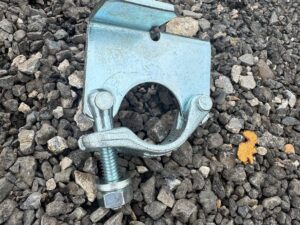
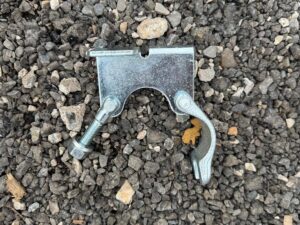
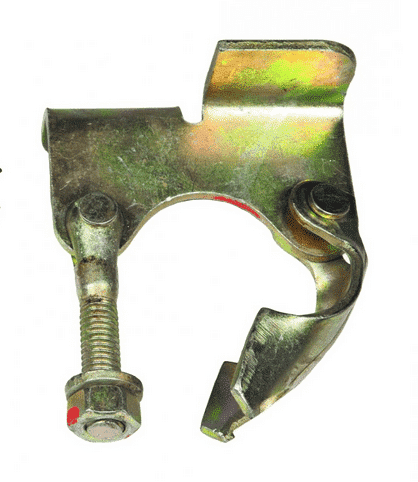
A board retaining clamp is an essential scaffold accessory that securely fastens 38mm-thick timber scaffolding boards to the transom tubes of a scaffold framework. By preventing boards from moving, lifting in high winds, or being displaced, the clamp ensures a stable, slip-resistant working platform. Designed to fit standard 48.3mm diameter scaffold tubes, it plays a key role in maintaining compliance with industry safety standards such as BS1139.2 and BS 2482:2009.
Whether you’re erecting temporary access platforms for building maintenance, undertaking renovations, or managing large construction projects, this fitting is vital for keeping scaffold boards in place, boosting site efficiency, and reducing the risk of accidents. Board retaining clamps are also commonly referred to as BRCs, board clips, or plank retaining clips.
Key Features and Benefits of Board Retaining Clamps
Board retaining clamps stand out for their straightforward design and robust performance in demanding environments. Here are the primary features and advantages that make them indispensable for scaffolding professionals:
- Reliable Security Without Surface Damage: With double flanges that distribute pressure evenly across neighbouring boards, the clamp uses a straightforward tightening system compatible with standard scaffold spanners. This setup securely fastens boards in place without causing dents or damage to the timber, keeping materials intact for repeated use.
- Protection Against Wind and Shifting: The clamps anchor scaffold boards directly to transom tubes, preventing movement or lifting caused by strong winds or foot traffic. This ensures a stable working platform and enhances safety when working at heights.
- Lightweight and Convenient to Use: Each pressed-steel clamp weighs about 0.61 kg, making them easy to handle and transport. Their lightness helps reduce worker fatigue during both assembly and disassembly.
- Durable and Standards-Compliant: Built to BS1139.2 standards, these clamps undergo thorough safety checks to ensure reliability. Their galvanised coating protects against rust, increasing their lifespan even in challenging outdoor environments.
- Flexible Usage: These clamps fit scaffold boards of any length and are perfect for different types of scaffolding setups, including independent tied systems and birdcage platforms, offering great versatility for various projects.
- Eco-Friendly and Economical: Responsibly sourced, these clamps deliver lasting performance at a reasonable cost, supporting eco-conscious choices and effective budget management.
These attributes not only boost productivity but also align with best practices for scaffolding safety, as recommended by organisations such as the National Access and Scaffolding Confederation (NASC).
Technical Specifications
For precise planning and procurement, here’s a detailed overview of the board retaining clamp’s specifications:
Specification | Details |
Material | Pressed Steel |
Tube Compatibility | 48.3mm Diameter |
Board Thickness Fit | 38mm |
Weight (Approx.) | 0.61kg |
Compliance Standards | BS1139.2, BS 2482:2009 |
Condition | New |
Finish | Galvanised for Corrosion Resistance |
Frequently Asked Questions (FAQs)
What tools do I need to install a board retaining clamp?
Installation is simple and requires only a standard scaffolding spanner to tighten the clamp. No specialised equipment is needed, making it accessible to both novice and experienced scaffolders.
Are these clamps compatible with all types of scaffold systems?
Yes, they are designed for use with standard 48.3mm tubes and 38mm-thick timber boards, fitting seamlessly into British Standard (BS)- compliant systems. However, always verify compatibility with your specific scaffold design.
How many clamps do I need per scaffold board?
Typically, one clamp per transom intersection is sufficient, but for longer boards or high-wind areas, additional clamps may be recommended. Consult your site’s risk assessment for optimal placement.
Can they be reused?
Yes, their durable pressed-steel construction allows multiple reuses, provided they are inspected for wear and damage before each application, in line with TG20:21 guidelines.
What if I need clamps for boards of different thicknesses?
Our board retaining clamps are optimised for 38mm-thick timber scaffolding boards. For alternative thicknesses, explore our range of scaffold clamps and fittings.
How do I position and tighten the clamp during installation?
Pass the 48.3mm transom tube through the clamp’s tube section, position the double flanges flat across two adjacent boards, then tighten firmly with a standard scaffolding spanner until secure (without over-tightening to avoid timber damage).
Do I need clamps at both ends of every board?
Ideally, yes, especially on platform edges or where wind uplift is a risk, to fully prevent movement in any direction.
What are the alternatives to retaining clamps for securing scaffold boards?
Common options include limpet clamps (lighter/cheaper for some uses), toeboard clamps (edge-specific), nails/screws (an older method but damages timber and is harder to reuse), or system scaffolding with built-in board hooks/locks. Clamps remain preferred for tube-and-fitting setups due to their reusability and lack of timber damage.
Are they suitable for high-wind or exposed locations?
Yes, they effectively resist wind uplift when properly installed, but always follow site-specific wind risk assessments and add extra clamps if gusts exceed typical thresholds (refer to TG20 or NASC guidance).
Do these clamps have a load rating, or are they purely for retention?
They are non-load-bearing fittings focused on retention and stability, not structural support; tested to BS1139.2, but do not carry worker/platform loads (transoms do).
Are they suitable for securing boards on suspended or cantilevered platforms?
Yes, provided the transom tubes are in place, and the setup follows your scaffold design (e.g., TG20 or site-specific drawings). Extra clamps may be needed on cantilevers to counter any uplift or vibration.
Why might a board retaining clamp loosen over time?
Vibration from heavy use, wind, or temperature changes can cause minor settling. Regular inspections (as per NASC guidelines) and re-tightening during checks prevent this. Using galvanised versions helps resist corrosion that could affect the thread.
Do these clamps ever damage scaffold boards?
When used correctly (proper tightening and correct board thickness), they grip without denting or damaging timber. Over-tightening or using it on thinner boards can cause indentations; however, always follow the manufacturer’s torque guidance (a common rule of thumb is hand-tight plus a quarter turn).
What are the guidelines for placing board retaining clamps on scaffold boards?
Scenario / Platform Type | Recommended Clamps per Board | Typical Spacing / Placement Notes | Rationale / When to Use More |
Standard working platform (e.g., 2-3 boards wide, sheltered site) | 2–4 per board | One at each end (near transom intersections) + one midway if board >2.5m long | Prevents uplift and lateral shift; sufficient for low-wind areas |
Exposed/high-wind or elevated sites | 3–6 per board | One at each end + additional every 1–1.5m along the board length | Extra resistance to wind uplift; follow the site wind risk assessment |
Toe boards/edge protection | 1–2 per toe board | One at each end or intersection with transom; add midway for longer sections | Secures against displacement; often combined with platform clamps. |
Long boards (>3m) or cantilevered sections | Add 1 extra per 1m beyond 2.5m | Place at every transom + extras on unsupported spans | Minimises sagging or movement; consult scaffold design drawings |
General rule for full platform security | Minimum 1 per transom intersection | Always secure at board ends and where boards meet tubes; overlap boards by a minimum. 150mm | Ensures no gaps or loose ends; aligns with BS 2482:2009 & TG20 guidance |
Video
Q & A





Reviews
There are no reviews yet